Sake Serving Temperature: Ranges, Styles, and Pairings
Sake serving temperature describes the temperature range used to present sake as chilled, room temperature, or warmed, and each range changes the drink’s flavor, aroma, texture, acidity, and alcohol perception. The Japan Sake and Shochu Makers Association identifies broad service bands of 8–15°C for chilled sake, 15–25°C for room-temperature sake, and 40–50°C for warmed sake; the National Research Institute of Brewing also identifies named stages from 5°C through 50°C. (Japan Sake and Shochu Makers Association, 2026(opens in new tab))
This guide first maps the Japanese temperature terms, then explains how heat and cold alter sensory perception. It continues with style-by-style recommendations, food-pairing decisions, safe heating steps, serving mistakes, and a practical two-temperature tasting method.
Sake Serving Temperature Categories: Chilled, Room Temperature, and Warmed
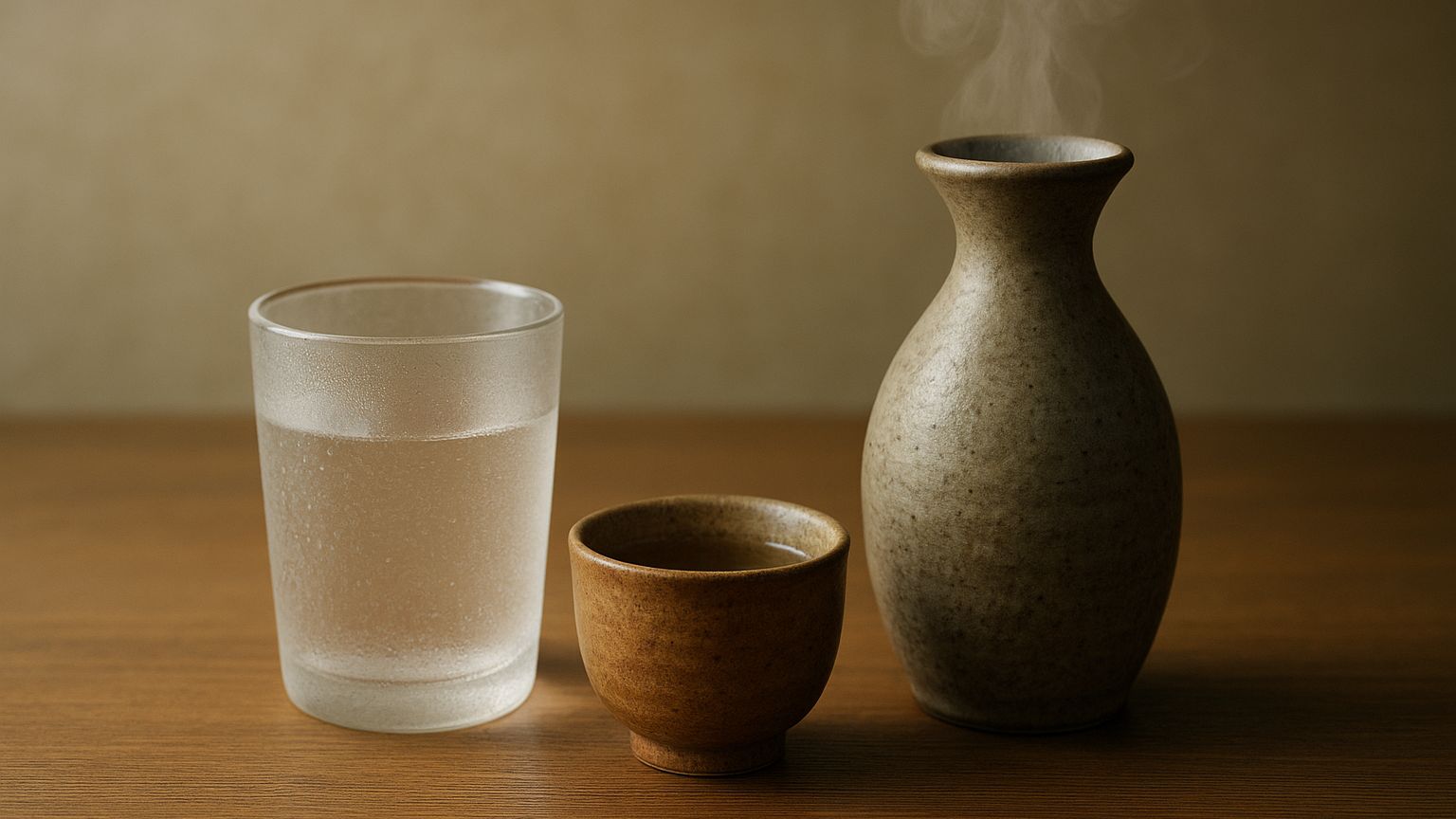
Sake falls into three practical temperature categories: chilled, room temperature, and warmed. These labels describe serving conditions rather than permanent classifications. A junmai may taste crisp at 10°C, expansive at 20°C, and rounder at 40°C, even though the liquid itself has not changed chemically.
| Temperature category | Approximate range | Japanese terms | Typical sensory direction |
|---|---|---|---|
| Chilled | 5–15°C / 41–59°F | Yuki-hie, hana-hie, suzu-hie, hiya-zake | Fresh, crisp, restrained aroma, denser texture |
| Room temperature | 15–25°C / 59–77°F | Jo-on, shitsu-on | Balanced, soft, naturally expressive |
| Warmed | 35–55°C / 95–131°F | Nuru-kan, jo-kan, atsukan, kan-zake | Rounder flavor, fuller umami, more obvious alcohol heat |
The ranges overlap because serving temperature works as a sensory dial. A 15°C pour can function as the upper edge of chilled service or the lower edge of room-temperature service. Which side feels correct depends on the sake’s aroma, acidity, sweetness, body, and the food beside it.
Chilled Sake: 5–15°C and the Role of Hiya-zake
Chilled sake generally sits between 5°C and 15°C, while hiya-zake describes sake served cold or unheated. More precise Japanese terms identify particular points: yuki-hie means approximately 5°C, hana-hie approximately 10°C, and suzu-hie approximately 15°C. The Japan Sake and Shochu Makers Association places its principal chilled band at 8–15°C. (Japan Sake and Shochu Makers Association, 2026(opens in new tab))
At 5°C, the palate receives a tight, refreshing impression, but delicate aroma becomes harder to detect. Around 10°C, ginjo-style fruit and floral notes usually gain more room to emerge while the sake retains a clean finish. Near 15°C, texture and savory detail become more apparent.
The National Research Institute of Brewing recommends approximately 10°C for fruity ginjo and unpasteurized nama sake. Its pairing guidance also associates 8–10°C service with a light, fresh, fruity profile and a slightly viscous texture. (National Research Institute of Brewing, 2026(opens in new tab))
Room-Temperature Sake: 20–25°C, Jo-on, and Natural Flavor
Room-temperature sake, called jo-on or shitsu-on, is commonly served between 20°C and 25°C. The broader Japanese service category can begin at 15°C, but 20–25°C provides a more useful home-tasting reference because the sake is neither strongly chilled nor heated.
At jo-on, the drink can show its natural relationship between sweetness, acidity, umami, rice character, and alcohol. A full-bodied junmai may become more savory, while a balanced honjozo can show a smoother middle palate. WSET’s 2025 sake-pairing guidance places room-temperature service at 20–25°C. (WSET, 2025(opens in new tab))
Room temperature does not mean “serve every bottle at the temperature of the room.” A summer kitchen may sit well above 25°C, while a cool cellar may fall below 15°C. Measure the sake rather than relying on the label.
Warmed Sake: Kanzake Temperatures from Mildly Warm to Hot
Warmed sake, or kanzake, usually begins around 35–40°C and reaches approximately 50°C in standard service. The most useful named stages are nuru-kan at about 40°C, jo-kan at about 45°C, and atsukan at about 50°C. WSET describes 40–45°C as gentle warming and 50–55°C as hotter service. (National Research Institute of Brewing, 2026(opens in new tab))
- Nuru-kan, 40°C: warm, rounded, and rarely aggressive.
- Jo-kan, 45°C: distinctly warm, with greater aromatic lift and alcohol presence.
- Atsukan, 50°C: hot and vivid, suited to sturdy sake and cold surroundings.
- Above 55°C: increasingly likely to suppress delicate character and emphasize alcohol heat.
Warmth can create a lighter, more fluid texture even as flavor becomes fuller. The Japan Sake and Shochu Makers Association reports that sake served at 40–50°C shows more cereal aroma, more detectable sweetness and umami, and lower viscosity than the same sake at 25°C. (Japan Sake and Shochu Makers Association, 2026(opens in new tab))
How Temperature Changes Sake Flavor, Aroma, Sweetness, Acidity, and Texture
Temperature changes the balance of perceived sweetness, umami, acidity, aroma intensity, viscosity, and alcohol heat. A comparative test from the Japan Sake and Shochu Makers Association assessed sake at 8–10°C, 25°C, and 40–50°C, using 25°C as a control. The results show why temperature affects it so dramatically: one bottle can present several distinct sensory profiles. (Japan Sake and Shochu Makers Association, 2026(opens in new tab))
Flavor Profile Effect: Why Cold Sake Seems Drier
Lower temperatures usually make sake seem cleaner, crisper, and drier, while moderate warmth makes flavor feel rounder and fuller. Chilling reduces the perceived force of sweetness and umami, which can sharpen the impression of acidity and produce a brisk finish. The drink may taste less rich even though its underlying composition remains the same.
Warmth around 40–45°C can enhance perceived sweetness and soften bitterness. However, WSET reports that service above 50°C can reduce perceived sweetness and make sake taste hotter and drier. (WSET, 2025(opens in new tab))
Try this comparison: pour one small measure at 10°C and another at 40°C. Which one seems sweeter? Which one gives the longer finish? The contrast reveals temperature’s influence more clearly than a single isolated glass.
Aroma Effect: Restrained Fruit Versus Released Cereal Notes
Cold service restrains aromatic release, while warming releases more volatile compounds and shifts the aroma toward greater intensity and cereal or savory notes. Chilled ginjo may show apple, pear, melon, floral, or herbal impressions with precision. As the liquid warms, those notes can become broader, while rice, grain, earth, and alcohol aromas become more noticeable.
Warmth does not automatically improve aroma. A delicate daiginjo can lose its fine floral definition when heated, whereas a robust junmai may gain depth. The Japan Sake and Shochu Makers Association found that fruity aroma remained more intact at 8–10°C than at 40–50°C. (Japan Sake and Shochu Makers Association, 2026(opens in new tab))
Mouthfeel or Texture Effect: Dense Cold Pour, Fluid Warm Pour
Chilling tends to create a denser, thicker mouthfeel, while warming produces a lighter, more fluid texture. Cold sake can feel compact and slightly viscous across the tongue. Warm sake moves more easily and may seem softer, broader, or less weighty even when its flavor becomes more concentrated.
This apparent contradiction explains many confusing tasting notes. A warm junmai can taste fuller but feel less viscous; a cold sake can taste lighter but feel denser. Flavor intensity and physical texture do not always move together.
Acidity and Alcohol Perception
Cold temperatures generally subdue alcohol sensation, while warmth makes alcohol and acidity more prominent. Chilling can mask alcohol potency and make a sake feel smoother and more refreshing. Warming increases the sensation of heat in the throat and can make acidity feel more direct.
That effect helps explain why a warm pour may suit grilled or savory food but feel harsh beside delicate sashimi. If the alcohol dominates, lower the serving temperature by 5°C and taste again. If the sake feels thin or closed, raise it gradually rather than jumping directly to hot service.
Sake Style Temperature Chart: Junmai, Ginjo, Nigori, and Nama
Sake style offers the first temperature recommendation, but the producer’s label guidance takes precedence. Rice-forward styles often tolerate room temperature and gentle warming. Aromatic ginjo and daiginjo, cloudy nigori, and unpasteurized nama generally show better balance when chilled. The Sake Anatomy, Takara Sake USA, and National Research Institute of Brewing all use style as a starting point rather than a rigid command. (Sake Anatomy, 2026(opens in new tab))
Junmai and Honjozo: When Room Temperature or Warming Works Best
Junmai and honjozo commonly perform well from 15–20°C and can handle gentle warming around 40–45°C. Junmai’s rice-driven body, acidity, and umami often become more expressive at jo-on or nuru-kan. Honjozo can show a smooth, adaptable profile, although hotter service may make its alcohol more obvious.
Use this sequence:
- Taste a full-bodied junmai at 15–20°C.
- Warm a separate small pour to 40°C.
- Compare umami, sweetness, acidity, and alcohol heat.
- Move toward 45°C only if the sake remains balanced.
Sake & Malt recommends approximately 15°C or 40°C for many junmai styles, while Takara Sake USA places junmai across room-temperature and warm service. (Sake Anatomy, 2026(opens in new tab))
Ginjo and Junmai Ginjo: Protecting Fruity Aromatics
Ginjo and junmai ginjo usually taste best at 8–15°C because cooler service preserves their fruity and floral aromatics. Begin at 10–12°C rather than serving the bottle at an extremely cold refrigerator temperature. That range retains freshness while allowing pear, melon, apple, banana, and floral notes to fully express their aromas.
A dry junmai ginjo with noticeable acidity may tolerate 15–20°C, particularly beside grilled fish or mushrooms. Test the bottle at two points; the colder sample will emphasize crispness, while the warmer sample may reveal texture and rice character.
Junmai Daiginjo: Delicate Flavor Needs Moderate Chilling
Junmai daiginjo generally benefits from 8–12°C service, with 12–15°C useful when the aroma feels closed. High polishing and aromatic precision make this style more vulnerable to excessive heat. Serving below 5°C can suppress the fragrance that defines the bottle, while warming above 40°C can distort delicate fruit and floral notes.
Pour a small amount at 8°C, wait several minutes, and retaste nearer 12°C. The gradual rise provides a practical way to find the point where aroma opens without sacrificing freshness.
Nigori and Namasake: Cloudy and Unpasteurized Styles
Nigori and namazake generally suit 5–10°C service. Nigori’s suspended rice solids create a cloudy, creamy texture that benefits from chilling, while sweetness and low acidity often feel more controlled at a cooler temperature. Some nigori can be served over ice when the producer permits it.
Namazake, also called nama, is unpasteurized and normally requires refrigeration. The National Research Institute of Brewing recommends approximately 10°C for nama, and Hakushika warns that heating unpasteurized sake can produce an unpleasant yeasty smell. Nigori does not automatically mean nama, so read the storage instructions before serving. (National Research Institute of Brewing, 2026(opens in new tab))
Futsu-shu, Sparkling Sake, and Aged Sake
Futsu-shu often offers the widest temperature flexibility, sparkling sake normally requires chilling, and aged sake depends heavily on its oxidation and flavor profile. A robust table sake may work cold, at jo-on, or warmed. Sparkling sake should remain chilled to preserve carbonation and lift; warming it can flatten the bubbles and amplify alcohol.
Aged sake may show caramel, nutty, dried-fruit, mushroom, or oxidative notes that can become more expressive around 15–20°C. If the bottle tastes heavy or alcoholic, lower it toward 10–15°C. The label remains the controlling reference because maturation, acidity, sweetness, filtration, and alcohol strength alter temperature response.
Practical Style-by-Style Sake Serving Temperature Chart
| Sake style | Starting temperature | Useful alternate range | Temperature decision |
|---|---|---|---|
| Junmai | 15–20°C | 40–45°C | Room temperature preserves rice character; gentle warmth expands umami. |
| Honjozo | 10–15°C | 40–45°C | Cool service keeps it fresh; moderate heat adds softness. |
| Ginjo | 10–15°C | 8–10°C | Chilling protects fruity and floral aroma. |
| Junmai ginjo | 10–15°C | 15–20°C | Moderate chilling balances aromatic precision and texture. |
| Junmai daiginjo | 8–12°C | 12–15°C | Cool, not icy, service preserves delicate aromatics. |
| Nigori | 5–10°C | 10–15°C | Chilling supports its creamy texture and manages sweetness. |
| Namazake | 5–10°C | Approximately 10°C | Cold storage and service protect its fresh, lively character. |
| Sparkling sake | 5–8°C | 8–10°C | Chilling preserves carbonation and refreshment. |
Choosing Sake Temperature for Food Pairing, Preference, and Occasion
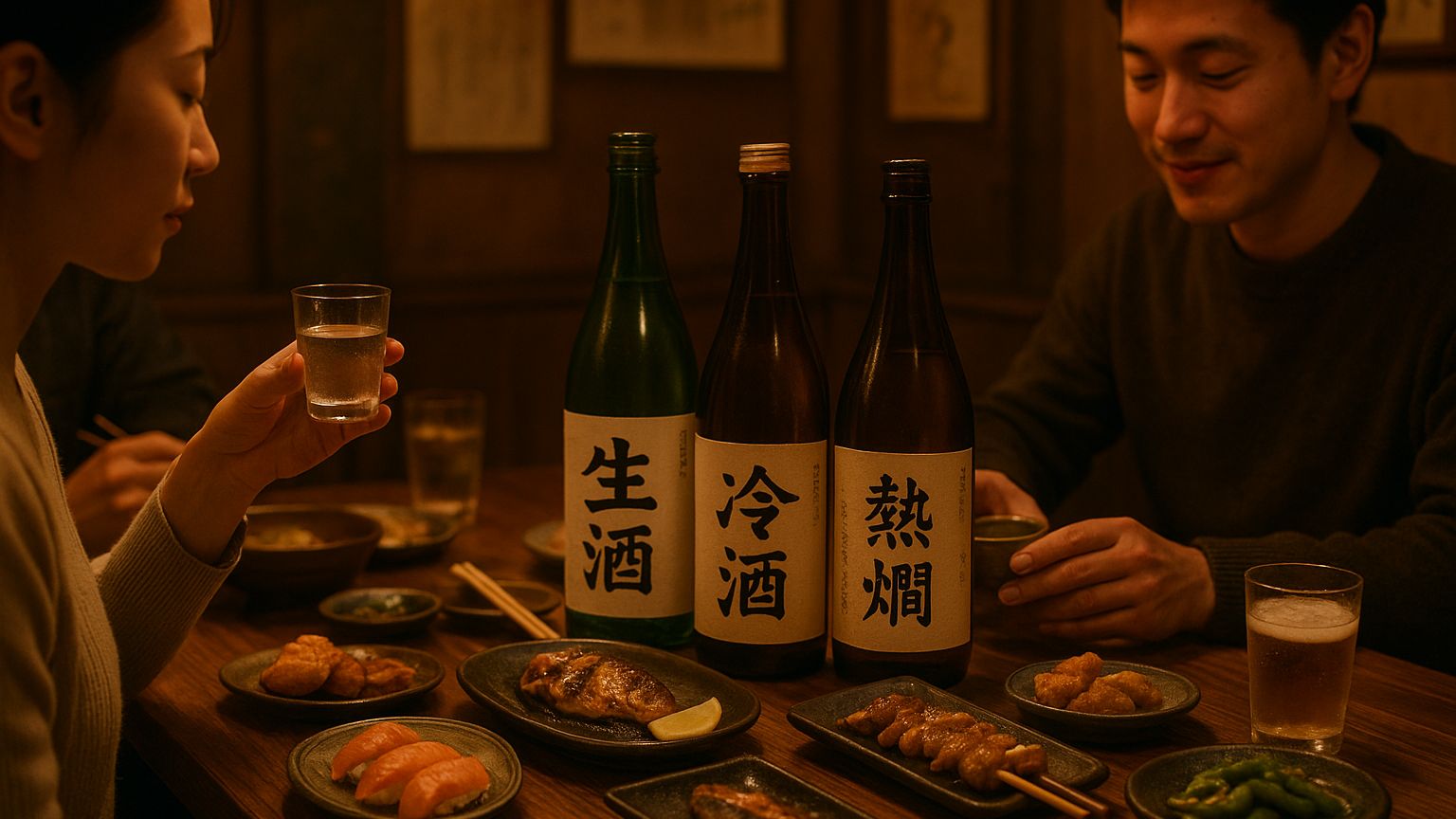
Food pairing improves when sake temperature matches the dish’s intensity, fat, acidity, spice, salt, and umami. WSET’s 2025 guidance places light, refreshing sake around 5–10°C, room-temperature service at 20–25°C, gentle warming at 40–45°C, and hotter service at 50–55°C. (WSET, 2025(opens in new tab))
Chilled Sake with Sashimi, Salads, Seafood, and Light Dishes
Chilled sake suits sashimi, salads, delicate seafood, and light dishes because its clean, crisp taste refreshes the palate without overpowering subtle flavors. Begin fragrant ginjo or junmai ginjo around 8–12°C. Use 5–10°C when citrus, chili, herbs, or heat call for extra lift; allow the sake toward 12–15°C when fatty fish or smoked seafood needs more body.
AP’s sake guide associates chilled ginjo with sushi, sashimi, salads, and delicate seafood. (Associated Press, 2026(opens in new tab))
Room-Temperature Sake with Grilled Fish, Mushrooms, and Umami-Rich Foods
Room-temperature sake works with grilled fish, mushrooms, soy-based dishes, and umami-rich foods when the meal needs a balanced, rice-driven partner. Serve junmai or a fuller honjozo around 20–25°C. This setting reveals savory depth without adding the sweetness and alcohol heat that warming can introduce.
For a dish with miso, roasted mushrooms, or grilled eggplant, compare a room-temperature pour with one at 40°C. The cooler glass emphasizes structure; the warmer glass may merge more smoothly with caramelized or savory flavors.
Warmed Sake with Yakitori, Tempura, Hot Pots, and Comfort Foods
Warmed sake suits yakitori, hot pots, grilled meats, tempura, and savory comfort foods when softness and fuller umami can meet the dish’s weight. Nuru-kan around 40°C works well for many junmai styles, while 42–45°C provides a more pronounced warm profile.
Tempura does not automatically require hot sake. A lighter honjozo at 10–15°C can cut through oil and refresh the palate, while a warm junmai may better complement a salty dipping sauce or dense root-vegetable tempura. Which contrast appeals to you: refreshment or integration?
How to Warm Sake Safely: Tokkuri, Hot-Water Baths, and Temperature Control
A tokkuri placed in a hot-water bath gives home drinkers the most even control over warmed sake. Fill the vessel while leaving about 1 inch of headspace. Place it in water reaching roughly two-thirds of the vessel’s height, and warm the sake for approximately 2–3 minutes before checking the temperature. (Japan Sake and Shochu Makers Association, 2026(opens in new tab))
Hot-Water Bath Method
- Pour only the portion you plan to drink into a heat-safe tokkuri or carafe.
- Heat water until it is just below a boil, then remove it from direct heat.
- Immerse the vessel to approximately its shoulder or two-thirds of its height; keep water out of the opening.
- Warm gradually and check the sake with a digital thermometer.
- Remove the vessel slightly before the target because residual heat can continue warming the liquid.
A water bath warms the sake gradually, unlike direct contact with a hob. WSET recommends using a heat-safe carafe inside hot water rather than placing sake directly on a burner. (WSET, 2025(opens in new tab))
How to Measure Sake Temperature
A digital food thermometer provides the clearest way to reach a precise serving target. Check the liquid after warming, stir gently when possible, and measure again because the vessel and liquid may heat at different rates.
- Delicate sake: begin at 35–40°C.
- Standard gentle warming: target 40–45°C.
- Hotter kanzake: test 45–50°C carefully.
Pour a small sample before committing the entire serving. If aroma has disappeared or alcohol feels sharp, stop heating and allow the sake to cool several degrees.
Microwave Risks and Reheating Limits
Microwaving works quickly but can create uneven hot spots, so short intervals and stirring are required. The Japan Sake and Shochu Makers Association recommends approximately 45 seconds to 1 minute for a serving, followed by stirring. Use a microwave-safe vessel, heat a small portion, and check the temperature rather than relying on a fixed time. (Japan Sake and Shochu Makers Association, 2026(opens in new tab))
Repeatedly cycling a full bottle between hot and cool conditions exposes more sake to heat and air. Warm only what you intend to drink, and use a fresh small measure when the first serving cools.
Serving, Storage, and Equipment Details That Change the Result
Glassware Versus Ochoko and Tokkuri
Glassware gives aroma more space, while an ochoko or tokkuri creates a more traditional, compact serving experience. A small ceramic cup can soften the visual and aromatic impact of a warm pour, whereas a wine glass makes chilled ginjo aromatics easier to inspect.
Pour the same sake into two vessels at the same temperature. Does the difference come from the liquid, or from the shape and material of the vessel? This comparison helps separate serving temperature from glassware effects.
Refrigeration, Open-Bottle Handling, and Light
Refrigerate namazake according to the producer’s instructions and protect opened sake from unnecessary heat, light, and oxygen exposure. The National Research Institute of Brewing identifies light, heat, and temperature exposure as factors that alter sake character over time. (National Research Institute of Brewing, 2026(opens in new tab))
Do not assume every bottle belongs in the coldest part of the refrigerator. A delicate nama needs cold storage, but a fuller pasteurized sake may show more aroma after a controlled rise toward 10–15°C or 20°C.
Temperature Pitfalls: Over-Chilling, Overheating, and Restaurant Assumptions
The common mistake is treating “cold” and “hot” as fixed outcomes instead of testing a precise temperature. The National Research Institute of Brewing states that sake becomes difficult to taste below 5°C, while its guidance identifies multiple stages between 5°C and 50°C. (National Research Institute of Brewing, 2026(opens in new tab))
Why Excessively Cold Sake Can Hide Aroma
Sake below approximately 5°C can mute subtle flavor and make detailed evaluation difficult. This temperature may provide dramatic refreshment, but a floral daiginjo or aromatic nama can seem flat when its aroma is tightly suppressed.
Let an over-chilled glass rise naturally from 8–10°C toward 12–15°C. Smell and taste it again before judging the bottle’s complexity.
Why Excessively Hot Sake Can Increase Alcohol Harshness
Sake above the normal kanzake range can make alcohol feel dominant and erase delicate aromatic distinctions. The National Research Institute of Brewing warns that excessive heat masks delicate aromas. Hakushika states that temperatures above 55°C can make the finer characteristics of junmai, honjozo, and futsushu difficult to distinguish. (National Research Institute of Brewing, 2026(opens in new tab))
Hotter is not automatically richer. A sturdy junmai may remain balanced at 45–50°C, while ginjo or daiginjo generally loses its aromatic identity much sooner.
When a Restaurant’s Cold or Hot Option Misses the Mark
A restaurant’s simplified cold-or-hot choice may not match the best temperature for the specific bottle. Ask whether the staff can serve aromatic sake closer to 10–15°C or warm a robust junmai gently at 40–45°C. A small adjustment can change the balance without changing the food or bottle.
When no label recommendation appears, compare two small pours:
| Style | First sample | Second sample | What to compare |
|---|---|---|---|
| Ginjo or daiginjo | 10°C | 15–20°C | Fruit, floral aroma, texture, alcohol |
| Junmai | 15–20°C | 40–45°C | Rice, umami, sweetness, warmth |
| Honjozo | 10–15°C | 40°C | Freshness, smoothness, alcohol balance |
| Nigori or nama | 5°C | 10°C | Creaminess, sweetness, freshness, aroma |
Advanced Comparisons for Drinkers Who Also Explore Wine
Sake temperature testing resembles wine service experiments, but sake often tolerates a broader temperature span. Wine drinkers who compare decanting methods can apply the same observation habit to sake: change one variable, record aroma and palate changes, and avoid confusing vessel effects with temperature effects. The related guide Wine Decanting for Tasting vs Drinking explores that tasting-versus-serving distinction.
Storage conditions also shape the starting point. A bottle kept in a warm, humid environment may arrive at a different temperature and condition than one stored under controlled conditions. For a broader cellar perspective, see Wine Cellar Humidity.
Temperature also belongs to the wider study of fermented beverages and aroma compatibility. Research indexed by Elsevier in 2026 examined how trace aroma components affect beer and seafood flavor compatibility, a useful advanced comparison for readers evaluating why beverage temperature and food aroma interact so strongly. The wine world offers another route into producer identity through Michelin Grapes, which connects estate recognition with place, production, and tasting context.
Frequently Asked Questions About Sake Temperature
What is the best temperature for sake?
The best temperature depends on the style and desired profile. Start aromatic ginjo and daiginjo around 8–15°C, fuller junmai around 15–20°C, and robust junmai near 40–45°C if gentle warmth improves its umami. Follow the producer’s recommendation when available.
Should sake be served cold or warm?
Sake can be served either cold or warm, but not every style responds equally well. Chilling favors freshness, crispness, and delicate fruit; warming favors roundness, cereal notes, and savory depth. Nama, sparkling sake, and delicate daiginjo normally call for chilled service, while junmai and some honjozo can tolerate warmth.
Can you drink sake at room temperature?
Yes, room-temperature service around 20–25°C provides a useful neutral tasting point. It can reveal rice character, umami, acidity, and alcohol without the strong sensory direction created by intense chilling or heating.
Is hot sake always cheap sake?
No, hot service does not define quality. Some premium junmai and honjozo express compelling umami at 40–45°C, while delicate ginjo and daiginjo may lose aromatic detail when heated. The style, brewing profile, and producer recommendation matter more than the price category.
Can you heat nigori or namazake?
Do not heat namazake unless the producer explicitly permits it, and normally serve it chilled. Nigori may sometimes tolerate gentle warming, but its creamy, sweet profile usually benefits from 5–10°C service. Check whether a cloudy bottle is also unpasteurized before choosing a method.
How long does sake stay at the target temperature?
The serving vessel, room conditions, and pour size determine how quickly sake moves away from its target. Small pours change temperature faster than a full tokkuri. Serve modest amounts, recheck with a thermometer, and adjust each pour instead of overheating an entire bottle.