Red Wine vs White Wine vs Rosé: A WSA Bangkok Guide to Choosing the Right Wine
What makes red wine, white wine, and rosé different?
The main difference is not simply the colour of the grape. It is the combination of grape variety, grape-skin contact, fermentation method, ageing, and serving temperature. Red wine is usually made with red grapes and fermented with the skins, white wine is commonly made without extended skin contact, and rosé receives enough skin contact to become pink but not enough to develop the structure of most reds.
That production choice affects the compounds you taste. Skin contact extracts tannin, colour compounds such as anthocyanins, and some aroma precursors. Fermentation and ageing then shape acidity, alcohol, oak character, sweetness, and texture. This is why a light Pinot Noir can feel very different from a powerful Cabernet Sauvignon, even though both are red wines.
How this comparison helps with wine education, food pairing, and buying decisions
Comparing the three categories gives you a practical vocabulary. Instead of asking only whether you like red or white wine, you can identify whether you prefer high acidity, noticeable tannin, ripe fruit, lower alcohol, oak, or residual sugar. Those details make wine selection more reliable in a restaurant, shop, or tasting class.
At WSA Bangkok, we teach this as a decision-making exercise: first identify the wine’s structure, then consider the food and occasion. The takeaway is simple: choose by structure and flavour, not colour alone.
Quick Answer: Should You Choose Red, White, or Rosé Wine?
Choose red wine for bold flavor, tannin, grilled meats, and rich foods
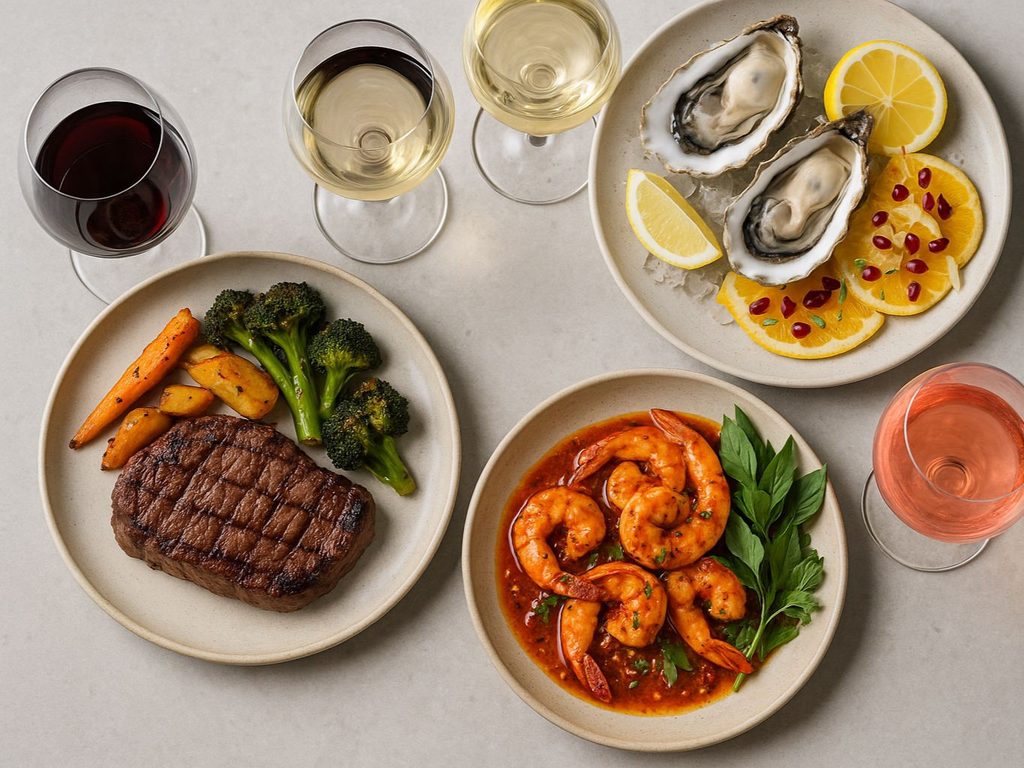
Choose red wine when you want more body, darker-fruit flavours, spice, or a drying sensation from tannin. Cabernet Sauvignon, Syrah, and many Merlots work well with grilled beef, lamb, roast dishes, mushrooms, and sauces containing stock or reduced meat juices. Tannin is especially useful with protein and fat because it refreshes the palate.
Choose white wine for crisp acidity, lighter dishes, and seafood
White wine is usually the strongest choice for seafood, salads, fresh herbs, poultry, and dishes where acidity matters. Sauvignon Blanc can cut through goat cheese and herb-heavy food, while Chardonnay may suit roast chicken or creamy sauces. High-acid whites also work well in Bangkok’s warm climate because they taste refreshing when properly chilled.
Choose rosé for refreshing acidity, red-fruit character, and versatile pairing
Rosé combines some red-grape fruit character with the freshness associated with white wine. Dry rosé often shows strawberry, watermelon, citrus, and herbal notes, making it useful with grilled prawns, charcuterie, vegetables, fried food, and moderately spicy dishes. If you are uncertain what a mixed group will enjoy, dry rosé is often a practical compromise.
How Red, White, and Rosé Wine Are Made: Grape Color and Skin Contact Explained
Why grape skins—not just red or white grapes—determine wine color
The juice inside most wine grapes is pale. Colour generally comes from the skins of red or black grapes, particularly anthocyanins. A red grape can therefore produce white wine if the juice is pressed away from the skins immediately; this is the method behind many Blanc de Noirs sparkling wines.
White or green grapes normally have pale skins and produce pale juice, but extended contact with skins, seeds, or oak can alter the wine’s colour and texture. The key lesson is that skin contact controls extraction. Grape variety matters, but it is not the only explanation for colour.
Red wine production: red grapes, extended skin contact, and warmer fermentation
For red wine, crushed red grapes usually ferment with their skins, seeds, and sometimes stems. During this period, alcohol extracts colour and tannin. Winemakers commonly ferment reds at warmer temperatures than whites—often roughly 20–30°C, depending on style and producer—to encourage colour and structural extraction.
After fermentation, the wine may mature in concrete, stainless steel, or oak. Oak can add flavours such as vanilla, toast, cedar, or baking spice, but it does not automatically indicate quality. The grape, site, balance, and winemaking decisions matter more than oak flavour alone.
White wine production: white or green grapes, limited skin contact, and cooler fermentation
White grapes are generally pressed before fermentation, separating the juice from the skins. Fermentation is often cooler—approximately 12–20°C—to preserve delicate floral, citrus, tropical, or mineral-associated aromas. Some styles, including orange or skin-contact wine, deliberately extend contact and sit outside the usual white-wine profile.
White wine can also be fermented or aged in oak. A stainless-steel Sauvignon Blanc may taste sharp and herbal, while an oak-aged Chardonnay can feel broader, creamier, and more textural. The takeaway: white wine is not automatically light, and red wine is not automatically heavy.
Rosé wine production: short maceration, saignée, and direct pressing
Rosé can be made by short maceration, in which red grapes remain with the juice for several hours or perhaps a day before pressing. Saignée removes some pink juice from a red-wine fermentation, while direct pressing extracts only a small amount of colour from red-grape skins. These methods produce different levels of colour, fruit intensity, and texture.
Most quality dry rosé is fermented like white wine, at relatively cool temperatures, to protect freshness. Deeper colour does not necessarily mean sweetness; always check the wine’s style and technical information.
Red vs White vs Rosé Taste, Body, Tannin, Acidity, and Sweetness
Red wine profile: bold body, tannins, dark fruit, spice, and richness
Red wine often offers blackberry, cherry, plum, blackcurrant, violet, pepper, tobacco, or earthy notes. Tannin creates grip and dryness on the gums, while alcohol contributes warmth and body. Pinot Noir may be pale, aromatic, and moderate in tannin; Cabernet Sauvignon is commonly fuller, more tannic, and more structured.
White wine profile: crisp acidity, lighter body, citrus, floral, and mineral notes
White wine commonly shows lemon, lime, green apple, pear, peach, flowers, herbs, or saline and mineral impressions. Acidity creates salivation and brightness. Riesling and Sauvignon Blanc can be highly aromatic and sharp, whereas oaked Chardonnay may be fuller and softer in texture.
Rosé wine profile: refreshing acidity with red-fruit character and moderate body
Rosé typically sits between white and red in colour and flavour, although its structure can vary significantly. Expect red berries, citrus, watermelon, herbs, and sometimes a lightly savoury finish. A very pale Provence rosé may be delicate and dry; a darker Tavel rosé can have more body and food-friendly intensity.
How sweetness, acidity, tannin, alcohol, and oak change the comparison
Sweetness comes from residual sugar, not fruit aroma. A wine that smells of ripe peach may still be completely dry. Acidity makes wine feel fresh, tannin makes it feel drying, alcohol adds warmth, and oak can add texture and spice. When comparing bottles, assess all four elements rather than relying on colour or grape name.
Practical tasting rule: if a wine feels heavy, pair it with richer food or serve it slightly cooler; if it feels sharp, add salt, fat, or a dish with gentle sweetness.
Red Wine vs White Wine vs Rosé: Health, Calories, Sugar, and Antioxidants
Polyphenols, flavonoids, anthocyanins, and resveratrol in wine
Wine contains polyphenols, a broad group of plant compounds. Flavonoids include several subgroups, while anthocyanins provide much of the red-purple colour in grape skins. Resveratrol is another grape-skin compound that has been studied extensively in laboratory and observational research.
Why red wine often contains more skin-derived antioxidants than white or rosé
Red wine usually has more skin and seed contact, so it commonly contains higher concentrations of certain polyphenols than white wine. Rosé generally falls between red and white, depending on maceration time and production method. However, the exact concentration varies by grape, vintage, fermentation, filtration, and ageing.
Alcohol calories and residual sugar: which wine is lower in calories?
Alcohol supplies approximately 7 kilocalories per gram, while carbohydrate supplies about 4 kilocalories per gram. A standard 150 ml glass of wine may contain roughly 100–150 calories, depending mainly on alcohol level and sugar. A dry, lower-alcohol white or rosé can be lower in calories than a high-alcohol red, but colour alone does not determine calorie content.
Antioxidant measurements are not proof of health benefits: alcohol risk and responsible drinking
Laboratory antioxidant activity does not prove that drinking wine improves health. The World Health Organization states that alcohol consumption is linked with health risks, including cancer, and that no level of alcohol can be considered completely risk-free in relation to some harms. Choose alcohol-free days, avoid driving after drinking, and follow local medical guidance.
The responsible conclusion is not that red wine is a health product. It is that wine is an alcoholic beverage to enjoy in moderation, for flavour and culture—not for resveratrol or antioxidant claims.
Food Pairing Guide: What to Eat with Red, White, and Rosé Wine
Best red wine pairings: steak, grilled meats, pasta, cheese, and rich sauces
Match tannic reds with protein-rich foods such as steak, grilled beef, lamb, and aged hard cheese. Medium-bodied reds suit tomato-based pasta, pizza, roasted vegetables, and mushroom dishes. Avoid pairing very tannic red wine with extremely hot chilli, which can make alcohol and bitterness feel more aggressive.
Best white wine pairings: seafood, salads, poultry, creamy dishes, and fresh herbs
High-acid whites suit oysters, prawns, steamed fish, salads, and dishes with lemon or herbs. Fuller whites can accompany roast chicken, pork, crab, and cream-based sauces. For Thai food, an aromatic off-dry Riesling may handle lime, herbs, and moderate chilli better than a heavily oaked white.
Best rosé pairings: cheese, cured meats, vegetables, poultry, and spicy foods
Dry rosé is highly adaptable because it combines acidity with enough fruit to cope with a broad range of flavours. Try it with grilled chicken, fresh cheese, cured meats, Greek-style salads, roasted vegetables, fried snacks, and seafood. Fruit-forward rosé can also work with mildly spicy dishes, provided the alcohol is not too high.
Pairing by sauce, spice, salt, acidity, and cooking method—not color alone
Start with the strongest element on the plate. Cream and fat need acidity; salty food makes many wines taste softer; chilli amplifies alcohol; sweet sauces require a wine at least as sweet as the dish. Grilling adds smoke and char, while steaming preserves delicate flavours. This method is more accurate than saying “red with meat” and “white with fish.”
A Practical Decision Framework: Which Wine Should You Choose?
Choose by flavor preference: bold, crisp, fruity, dry, or sweet
- Bold and structured: Cabernet Sauvignon, Syrah, or full-bodied Merlot.
- Light and aromatic: Pinot Noir, Riesling, or unoaked Chardonnay.
- Crisp and herbal: Sauvignon Blanc or Albariño.
- Fruity and refreshing: dry rosé or lighter red wine.
- Sweet: look for a clearly stated demi-sec, off-dry, late-harvest, or dessert style.
Choose by occasion, weather, and serving temperature
For a hot afternoon in Bangkok, a chilled white or rosé is often more comfortable than a powerful red. For a slow dinner with grilled meat, a structured red may be more satisfying. Sparkling rosé works well as an aperitif, while a medium-bodied white can move easily from appetiser to main course.
Recommended serving temperatures for red, white, and rosé wine
Serve sparkling wine at approximately 6–10°C, light white and rosé at about 7–10°C, fuller white wines around 10–13°C, and light reds around 12–16°C. Full-bodied reds are often best near 15–18°C. “Room temperature” is too warm for many tropical indoor settings, so brief chilling is usually helpful.
Beginner-friendly choices: approachable white wine and rosé as a bridge to red wine
For a new wine drinker, fresh white wine and dry rosé often provide immediate clarity: acidity is easy to recognise, and tannin is less challenging. Once you understand acidity and fruit character, try a lighter Pinot Noir or Merlot. This progression teaches structure without overwhelming the palate.
Popular Red, White, and Rosé Wine Styles and Grape Examples
Red wine examples: Cabernet Sauvignon, Merlot, and Pinot Noir
Cabernet Sauvignon is typically full-bodied, tannic, and marked by blackcurrant, cedar, and spice. Merlot is often rounder, with plum and softer tannin. Pinot Noir is generally lighter-bodied, higher in aroma, and associated with red cherry, raspberry, earth, and savoury complexity. Climate and winemaking can change every one of these profiles.
White wine examples: Chardonnay and Sauvignon Blanc
Chardonnay can range from lean, citrus-driven, and unoaked to rich, creamy, and oak-aged. Sauvignon Blanc is commonly recognised by high acidity and citrus, herb, gooseberry, or tropical notes. Comparing an unoaked Sauvignon Blanc with an oak-aged Chardonnay is an excellent way to learn the effect of acidity and texture.
Rosé styles: Provence rosé, dry rosé, sparkling rosé, and fruit-forward examples
Provence rosé is usually pale, dry, fresh, and restrained. Other dry rosés may be deeper in colour and more generous in strawberry or cherry flavour. Sparkling rosé adds carbonation and works particularly well as an aperitif. Fruit-forward examples can be pleasant, but check the label for sweetness rather than assuming all rosé is sweet.
Red Wine vs White Wine vs Rosé: Final Recommendation and Next Steps
The simplest choice: match body, acidity, tannin, sweetness, and food
Choose red wine for tannin, body, and rich food; white wine for acidity, freshness, and delicate or creamy dishes; rosé for red-fruit flavour, refreshment, and broad versatility. Then adjust for alcohol, sweetness, oak, spice, and serving temperature. This framework will outperform rigid colour-based pairing rules.
How WSA Bangkok wine courses and tasting guidance can improve your selection skills
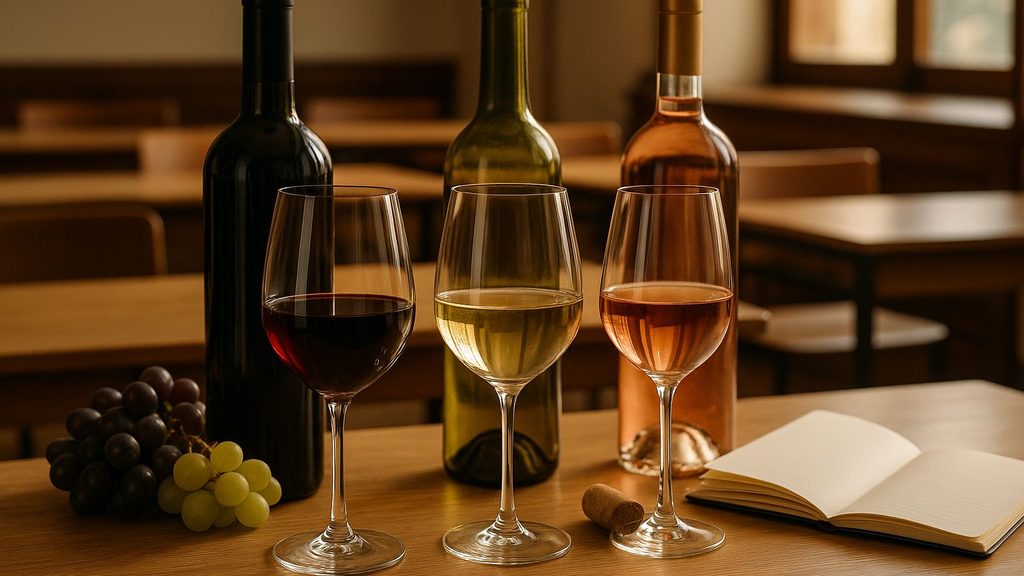
The fastest way to improve is to taste deliberately. Compare a Cabernet Sauvignon, Sauvignon Blanc, and dry rosé beside the same foods, then record acidity, tannin, body, sweetness, aroma, and finish. At WSA Bangkok, structured tasting helps turn impressions such as “too strong” or “too sour” into useful wine language and confident buying decisions.
Your next step is practical: choose three contrasting bottles, serve each at the correct temperature, and taste them with one dish. Notice what changes. That comparison is the foundation of wine education.