Decanting wine does not mean leaving every bottle in a wide glass vessel for hours. Used well, it is a controlled service technique. Used carelessly, it can flatten delicate aromas, warm the wine, or scatter sediment through an otherwise clear pour.
The right question comes before the corkscrew: does this bottle need air, sediment removal, or neither?
This guide explains how to decant wine safely, how to choose a decanter, how long to let different styles breathe, and when direct pouring gives a better result. It also covers white wine, rosé, sparkling wine, sake, natural wine, Vintage Port, and practical service in a warm room.
What Is Decanting?
Decanting is the controlled transfer of wine from its original bottle into another vessel, such as a glass decanter or carafe. The process has two distinct purposes:
- Aeration: exposing a young or closed wine to air so its aromas become more expressive and its tannins feel less severe.
- Sediment separation: leaving deposits from a mature, bottle-aged, or unfiltered wine behind in the original bottle.
These are separate jobs. A broad decanter and an extended rest may suit a firm young Cabernet Sauvignon. The same treatment can strip the life from a fragile, mature Pinot Noir. Think of decanting as a dial rather than a switch: increase air when the wine seems tight, and reduce exposure when the wine already smells open.
Oxygen can change the way wine smells and feels. Fruit may seem more open, oak may integrate, and tannin may become less angular. Prolonged exposure, however, can make a delicate wine taste flat or tired. Decanter shape matters less than the wine’s age, structure, condition, temperature, and the amount of surface area exposed to air.
Quick Answer: How to Decant Wine Safely
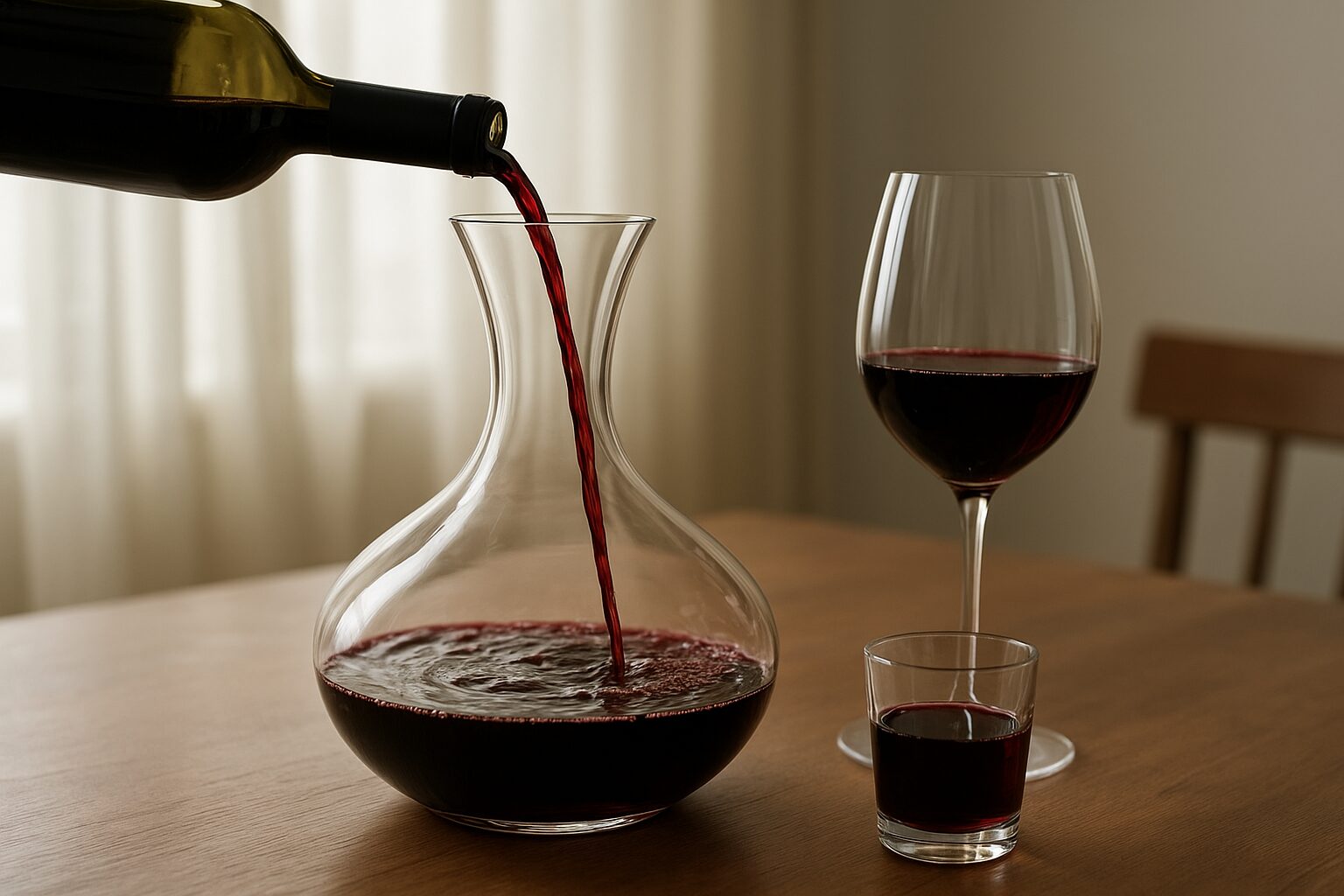
Decant young, full-bodied red wine to soften structure
Young Cabernet Sauvignon, Syrah, Nebbiolo, Malbec, and structured Bordeaux blends often benefit from controlled aeration. Pour a small sample directly from the bottle first. Then transfer the remainder to a broad, clean decanter and taste after about 30 minutes. Continue only while the wine becomes more aromatic, balanced, and precise.
For young red wine, a starting window of at least 30 minutes and up to 1 hour is commonly used; taste rather than relying on the clock. A wine-service reference on decanting young wines(opens in new tab) gives the same starting range.
Decant mature wine briefly to remove sediment
Stand an older bottle upright before opening. Pour slowly into a narrow-neck decanter while holding a light behind the bottle’s shoulder. Stop as soon as sediment approaches the neck. The goal is a clean pour, not maximum oxygen exposure.
Stop when the wine reaches balance
There is no universal breathing time. A wine is ready when fruit, acidity, tannin, alcohol, and oak feel integrated. If the nose becomes flat, the fruit tastes hollow, or the finish shortens, reduce further air exposure and serve the wine promptly.
Most sake needs gentle handling, not vigorous aeration
Most sake can be poured directly from the bottle into a clean glass. Rich junmai, aged koshu, some nama styles, and intensely aromatic bottles may respond to a short, gentle transfer. Delicate ginjo and daiginjo usually benefit more from correct temperature and clean glassware than from a broad wine decanter.
Why Decant Wine?
To open a young wine’s aromas
A young wine can smell closed, smoky, reduced, or dominated by oak immediately after opening. A controlled transfer gives the wine more contact with air than it receives in a narrow bottle. Floral, herbal, black-fruit, mineral, and spice notes may become easier to identify. Closed aromas can open up, but the change should bring greater detail rather than simply more intensity.
Do not confuse louder aromas with better aromas. Ask yourself: has the wine gained detail, or has alcohol simply become more noticeable?
To soften firm tannin
Tannin creates grip and dryness, especially in young Cabernet Sauvignon, Nebbiolo, Sagrantino, Syrah, and other structured reds. Aeration can make that grip feel smoother. It does not remove tannin, and it cannot turn an unbalanced wine into a balanced one.
To separate sediment
Sediment develops naturally in some mature red wines and fortified wines. It may appear as dark flakes, a fine dusty layer, or crystalline material. Sediment is not automatically a fault, but a gritty deposit can distract from the wine’s texture and finish. Naturally made or intentionally unfiltered wine may contain particles even when the bottle is relatively young.
To improve service
A decanter can make pouring easier at a dinner or tasting. It also lets you present a wine away from a damaged, stained, or unattractive bottle. That practical benefit stands apart from aeration. A simple carafe can perform the same service role as an ornate, specially designed vessel when the wine needs no dramatic exposure to air.
Which Wines Should You Decant?
Young, full-bodied red wine
Consider decanting a young wine when it combines concentrated fruit with high tannin, noticeable oak, or a closed aroma. Examples include:
- Young Napa Cabernet Sauvignon
- Barolo or another structured Nebbiolo
- Northern Rhône Syrah and Australian Shiraz
- Dense Malbec
- Young Bordeaux blends
- Powerful Tempranillo and Ribera del Duero
- Robust Sangiovese from Brunello or Chianti-based styles
Begin with a moderate amount of air. A broad base exposes more wine to oxygen, but it also reduces your margin for error. Taste at intervals rather than leaving the bottle unattended.
Mature red wine
Mature Bordeaux, older Rioja, aged Barolo, bottle-aged Cabernet Sauvignon, Vintage Port, and some unfiltered reds may contain sediment. Decant these wines immediately before service, using a slow pour. The brief transfer needed to remove the deposit may provide all the air the wine can handle.
Delicate red wine
Delicate Pinot Noir, old Burgundy, mature Grenache, and fragile low-alcohol reds can fade quickly. Pour a small amount into a glass and observe it for several minutes. If the wine already smells open and tastes harmonious, leave it in the bottle. Decanting an old Burgundy for too long resembles asking a fragile structure to carry unnecessary weight: the process can expose weakness rather than reveal hidden beauty.
White wine
Full-bodied white Burgundy, structured Chardonnay, white Rhône blends, and some mature whites may benefit from a brief decant when they smell tight or reductive. Keep the wine cool and use a smaller vessel or a narrow-neck decanter. White wine does not need to be red to respond to an oxygen boost, but freshness should remain the priority.
Rosé
Rosé rarely needs decanting. Direct service usually protects its freshness and keeps the temperature under control. A decanter may make sense for presentation, but it is rarely needed for aeration. If the wine smells muted, swirl it gently in a white-wine glass before transferring the whole bottle.
Sparkling wine
Sparkling wine normally stays in its bottle. Transferring it can reduce carbonation and alter the texture that gives the wine its lift. Pour carefully into a clean flute or white-wine glass instead. A still-wine decanter cannot replace the bottle’s role in preserving pressure.
Wine Decanting Decision Table
| Wine or style | Reason to decant | Starting method | Risk to watch |
|---|---|---|---|
| Young Cabernet Sauvignon | Open firm tannin and closed fruit | Broad decanter; taste after 30 minutes | Dominant alcohol or oak |
| Young Nebbiolo or Barolo | Give structure and perfume time to integrate | Moderate aeration with repeated tasting | Drying tannin or fading aroma |
| Mature Bordeaux | Separate bottle sediment | Narrow-neck decanter; slow pour | Rapid loss of fragile aromas |
| Delicate Pinot Noir | Usually no transfer required | Pour into a glass and monitor | Thin or dull fruit |
| Full-bodied white Burgundy | Loosen a tight or reductive aroma | Brief, cool decant | Loss of freshness |
| Rosé | Rarely a practical need | Serve directly from the bottle | Temperature rising |
| Sparkling wine | Normally no benefit | Keep in the bottle | Loss of bubbles |
| Vintage Port | Remove sediment | Slow illuminated pour | Overexposure after decanting |
| Most sake | Usually no sediment problem | Pour gently into a clean glass | Muted fragrance |
Choose the Right Decanter
Wide-base decanter
A wide-base decanter creates a broad pool of wine and suits a young, tannic red that needs faster air contact. Choose one with a stable base and enough capacity to hold the bottle without filling the vessel to its rim. More exposed surface area can encourage faster aromatic development, but it also demands closer tasting.
Narrow-neck decanter
A narrow-neck decanter gives you more control over the pour and limits exposed surface area. It suits mature wines, delicate reds, and sediment separation. The shape also helps you direct a steady stream while watching the bottle’s shoulder under a light.
Compare a dramatic swan-shaped vessel with a simple carafe. The elaborate shape may look striking, but the simple carafe often gives better pouring control, easier cleaning, and less risk of trapped detergent or dust.
Decanter alternatives
You do not need specialist equipment. A clean glass carafe or large wine glass can aerate a young wine. A jug works if it has no soap, food, coffee, or fragrance residue.
For sediment-heavy wine, an ordinary wide jug is less useful because its broad opening encourages unnecessary exposure. A narrow-neck vessel gives you a steadier pour. If the wine only needs a little air, pouring a measured glass may offer more control than decanting the entire bottle.
Funnel, filter, and light source
A wine funnel directs the stream and may hold a sediment screen. A fine filter removes visible particles, but it can also strip texture from naturally cloudy wine. Use filtration only when you want a clearer pour.
A phone flashlight behind the bottle’s shoulder makes sediment easier to see and avoids the heat and safety concerns of an open candle. Keep the light behind the bottle rather than shining directly through the entire glass. A bright background can make the dark line of sediment easier to identify as it approaches the neck.
Cleaning the decanter
Wash the decanter with unscented detergent, rinse it thoroughly, and allow it to dry completely. Soap residue can make wine smell strangely sweet or chemical. A damp cloth, scented candle, spices, and dusty storage can interfere with aroma too.
Before pouring, smell the empty vessel. Does it smell neutral? If not, rinse it again with hot water and let it air-dry. Avoid storing a decanter upside down on a surface that traps moisture inside the bowl.
How to Decant Wine Step by Step
1. Stand the mature bottle upright
Stand an older bottle upright for several hours or overnight when planning allows. Sediment then settles at the bottom instead of remaining suspended through the wine. A young, clear wine usually needs no standing period.
2. Prepare the work area
Set out the decanter, corkscrew, clean glasses, light source, napkin, and a small container for the sediment-rich final pour. Keep the equipment scent-free and stable. Place the decanter on a level surface where you can see the bottle and pour without reaching across guests.
3. Open the bottle carefully
Cut the capsule below the lip and remove the cork slowly. If the cork looks fragile, use a two-pronged opener or work patiently with a corkscrew. Do not shake the bottle while removing the closure. Wipe the bottle mouth so cork fragments and dust do not enter the decanter.
4. Taste a control sample
Pour a small sample directly into a glass. Smell and taste it before transferring the bottle. Note the fruit, acidity, tannin, alcohol, oak, and finish. This reference point helps you judge whether decanting produces a real improvement.
A control sample turns guesswork into a comparison. If the wine already has expressive fruit and a long, balanced finish, direct service may beat a long decant.
5. Pour steadily over a light
Hold the bottle at a steady angle and pour in one controlled movement. Keep the shoulder illuminated. Avoid large splashes when handling a mature wine; the aim is sediment separation, not vigorous aeration.
6. Slow down near the final half
When the bottle is about half full, reduce the flow. Watch the neck and shoulder closely. Sediment often moves forward in a dark, cloudy wave when the angle changes. Keep the bottle at the same angle instead of rocking it back and forth.
7. Stop before the sediment enters
Stop pouring as soon as cloudy material reaches the neck. Leave the final portion behind if necessary. Losing a small amount of wine is preferable to spreading gritty sediment through the decanter.
8. Taste the decanted wine
Check the wine again after pouring. If it tastes fresher and more harmonious, continue with service. If it tastes weaker or more tired, move it into a smaller clean bottle, seal it, and serve promptly.
How Long Should Wine Breathe?
Young red wine
- Light or medium-bodied young reds: begin with a short period in the glass or a modest transfer.
- Young Cabernet Sauvignon, Syrah, Nebbiolo, and Malbec: begin around 30 minutes and reassess.
- Very dense, highly tannic reds: taste after the first interval and continue only while the wine remains energetic.
These are starting points, not promises. Producer, vintage, alcohol, acidity, oak, closure, storage, and serving temperature can change the response. A 2026 perspective on decanting practice(opens in new tab) also recommends tasting and adjusting rather than treating time as a fixed prescription.
Mature and delicate wines
Mature reds often need only the time required to remove sediment. Pour just before service and watch the wine in the glass. For a fragile Pinot Noir or old Burgundy, direct pouring may be safer than a broad decant.
Sensory signs that the wine is ready
- Fruit becomes clearer rather than merely louder.
- Tannin remains present but feels less abrasive.
- Alcohol no longer dominates the middle of the palate.
- Acidity supports the fruit instead of making the wine seem sharp.
- The finish becomes longer, more coherent, and more mineral or savoury in detail.
Signs of over-aeration
An over-aerated wine may smell flat, bruised, vinegary, or unusually brown at the rim. Fruit loses energy, and the finish becomes thin. Taste before decanting, then check again at regular intervals. Once the wine begins to fade, more air will not restore it.
How to Decant Wine Without a Decanter
A large wine glass can provide enough space for a young, clear wine. Pour a small amount, swirl gently, and compare it with a sample from the freshly opened bottle. This method allows the glass to act as a small decanter while preserving the option to stop immediately.
Pouring a young wine between two clean vessels can accelerate aeration, but the method offers less control and creates more splashing. Never use that approach with a sediment-heavy bottle. Movement redistributes the deposit you are trying to leave behind.
A clean carafe works well for informal service. Check its smell before use. If you can detect detergent, cupboard odour, fruit juice, or stale water, choose another vessel.
Special Cases: Natural, Cloudy, and Fortified Wine
Natural and intentionally unfiltered wine
Natural and intentionally unfiltered wines may contain haze, lees, or fine particles that contribute texture and aroma. Do not filter automatically just to make the wine brilliant. First ask whether clarity suits the style.
Use a filter when gritty sediment would make service unpleasant or when the bottle contains large unwanted particles. Avoid fine filtration for cloudy natural wine, pét-nat, lees-aged white wine, or unfiltered sake unless the producer recommends it.
Vintage Port
Vintage Port commonly receives careful sediment separation before service. Pour slowly into a narrow-neck decanter and stop when the deposit moves into the neck. Serve soon after decanting rather than leaving the wine exposed for hours.
Late Bottled Vintage, Vintage, and Tawny Port
Port styles do not all behave alike. Late Bottled Vintage and Vintage Port may need sediment removal, while Tawny Port is often bottled after extended maturation and may arrive relatively clear. Inspect the bottle, taste first, and decant only when the wine’s condition or presentation calls for it.
Wine Versus Sake Decanting
Why most sake can be served directly
Most sake arrives ready for direct service, so a decanter may add handling without solving a sediment problem. Pour into a clean glass, check the temperature, and evaluate the aroma before experimenting.
Sake styles that may respond to brief aeration
Rich junmai, koshu, nama, muroka, nigori, and some intensely aromatic ginjo sake can change after a short transfer. A few minutes may broaden savoury rice, umami, fruit, or floral aromas. The effect is usually brief rather than an invitation to leave the sake in a broad vessel for hours.
Gentle sake decanting technique
- Use a small, clean, scent-free glass carafe.
- Pour gently without splashing.
- Keep cloudy nigori intact unless you deliberately want to separate its solids.
- Taste after a few minutes.
- Return the sake to a cooler environment if fragrance begins to fade.
Serve delicate ginjo and daiginjo cool, while richer junmai can be explored at a slightly warmer temperature. Follow the brewery’s serving guidance when the label or technical sheet provides it.
Storing sake after opening
Recork opened sake, store it upright in a refrigerator, and protect it from light and heat. Nama and other delicate styles deserve prompt attention. In a warm room, temperature can influence the experience as strongly as the amount of air.
Decanting Wine in Bangkok Service Conditions
A warm dining room can make a young red seem more alcoholic and less balanced as it sits in a broad decanter. Chilled sake can also lose its intended freshness when left on a table. Decant only the amount you plan to serve, monitor the temperature, and keep the remaining bottle protected.
Use an ice bucket for white wine, rosé, and chilled sake when the room is warm. For red wine, avoid placing a full decanter beside a hot kitchen pass. A smaller working decanter lets you protect the unused wine and adjust the serving temperature more precisely.
Use comparative tasting instead of memorised timings
Want to learn what air actually changes? Use two identical glasses. Pour one sample directly from the bottle and decant the other. Taste both at the same temperature, then repeat after the first interval.
- Record the clearest aroma in each glass.
- Compare tannin, acidity, alcohol, and texture.
- Assess whether the finish grows longer or becomes thinner.
- Repeat the comparison after another short interval.
- Serve when the decanted sample gains balance, not simply volume.
Wine professionals develop this judgment through repeated side-by-side tasting. Training routes can differ in emphasis: WSET vs CMS vs FSS Training compares three education paths for people building structured knowledge in wine and beverage service.
Common Decanting Mistakes
- Decanting by age alone: a young wine may be open, while an older bottle may be fragile.
- Leaving every red wine for hours: air can improve structure, but it can also exhaust delicate fruit.
- Swirling a sediment-heavy bottle: movement sends deposits back into suspension.
- Using a scented or poorly rinsed decanter: detergent and cupboard odours distort the nose.
- Ignoring temperature: a warm wine can seem more alcoholic and less precise.
- Filtering every cloudy wine: haze may reflect the producer’s intended texture.
- Filling a broad decanter to the brim: excessive volume reduces the surface area available for useful observation and controlled swirling.
- Failing to taste first: without a control sample, you cannot tell whether the transfer helped.
Decanting Checklist
- Young, full-bodied red: begin with a controlled period of air.
- Very tannic or closed red: taste at regular intervals.
- Mature wine: decant briefly for sediment and serve.
- Delicate wine: use the glass instead of a broad decanter.
- Most sake: pour gently and taste before considering aeration.
- Sparkling wine: keep it in the bottle.
- Cloudy or natural wine: do not filter until you understand the style.
- Warm room: decant less wine and monitor temperature.
Frequently Asked Questions About Decanting
Can decanting ruin wine?
Yes. Prolonged air exposure can make a fragile or mature wine fade. Taste before transferring, choose a smaller vessel for delicate bottles, and serve as soon as the wine begins to lose freshness.
Should every red wine be decanted?
No. Decanting helps when a wine needs aeration or sediment separation. A light, open young red may taste better with direct pouring and a few minutes in the glass.
Does swirling a bottle aerate wine?
Swirling can mix air into a clear young wine, but it also disturbs sediment. Keep sediment-heavy bottles still and use a slow, illuminated pour instead.
Should I decant wine overnight?
Overnight decanting creates unnecessary exposure for many wines, especially mature reds. Taste during service and extend the air time only when the wine remains closed and structurally firm.
Can I decant sake in a wine decanter?
You can, but a small neutral carafe usually offers better control. Avoid a broad vessel when serving delicate ginjo or daiginjo, and keep the transfer gentle.
What should I do if I over-aerate a wine?
Move the remaining wine into the smallest clean bottle available, seal it, and serve it promptly. Do not add more air in an attempt to restore fruit that has already faded.
How do I practise decanting accurately?
Use two identical glasses and keep both samples at the same temperature. Taste directly from the bottle, then compare the decanted sample after the first interval and again later. Record aroma, structure, texture, and finish.
What should I record during a decanting experiment?
Write down three observations at each tasting: the clearest aroma, the dominant structural sensation, and the length of the finish. When those signals move toward greater balance, serve the wine. When aroma and finish retreat, reduce oxygen exposure and move directly to the next glass.
Can a decanter replace proper wine storage?
No. Decanting changes a wine during service; it does not protect an unopened bottle. Store unopened wine away from heat, light, vibration, and strong odours, then decide whether the bottle needs aeration or sediment removal immediately before drinking.
Is sediment safe to drink?
Sediment is usually a natural deposit rather than evidence of spoilage. It can still feel gritty and distract from the wine, which makes separation useful during formal service. If the wine smells faulty, decanting will not correct the underlying problem.
Should I decant an inexpensive wine?
Price does not decide the question. A modestly priced young red can benefit from a short oxygen boost, while an expensive mature wine can collapse under prolonged exposure. Taste the bottle and respond to its structure, aroma, and condition.
How can I decant wine quickly?
Pour a small amount into a large glass, swirl gently, and taste after a few minutes. A clean carafe can provide faster aeration for a young wine, but avoid aggressive transfers when the bottle contains sediment or delicate aromas.
What if the cork breaks?
Remove the remaining cork carefully, then pour the wine through a clean strainer only if cork fragments remain. Do not confuse cork particles with sediment. Taste the wine for cork taint before deciding whether to serve it.
Should I double-decant wine?
Double-decanting means transferring wine into a decanter and then returning it to the rinsed bottle. It can help when you want aeration but need to serve from the original labelled bottle. Use the method for sturdy young wines; mature or fragile wine deserves a gentler approach.
How do I know when a wine has had enough air?
Look for a clearer nose, smoother tannin, integrated alcohol, and a finish that remains energetic. Stop when those qualities peak. A wine that smells bruised, tastes hollow, or loses its finish has moved beyond its useful window.
Does the shape of the decanter matter more than the wine?
No. Shape affects surface area, pouring control, and cleaning, but the bottle’s condition sets the strategy. Choose a broad vessel for a firm young red and a narrow vessel for sediment removal or delicate wine, then let tasting determine the next step.