What should the event achieve: client engagement, sales, brand awareness, or community-building?
A wine tasting networking event should pursue one primary outcome, because client engagement, sales generation, brand awareness, and community-building require different guest journeys. A client-engagement event needs time for meaningful conversation with selected accounts; a sales-focused event needs qualified attendees, clear product stories, and a follow-up system; a brand-awareness event benefits from distinctive wine regions or producers; and a community event should prioritize openness, repeat attendance, and inclusive participation.
Write the objective as an observable result. “Strengthen relationships” is too broad for event planning. “Create 20 qualified conversations with hospitality buyers” or “introduce 40 members of a professional community to three emerging wine regions” gives the host a basis for invitations, staffing, tasting design, and post-event measurement. Bizzabo reported that its customers increased their event portfolios by 52% in the first half of 2024 compared with the same period in 2023, while regional field marketing events with fewer than 150 registrations increased by 60%. That growth supports the use of smaller, purpose-built gatherings when the goal depends on deeper interaction rather than maximum attendance.
For a corporate event, define the commercial purpose before choosing the wine. A distributor may want buyers to compare regions and price points. A law firm may use the tasting to create a relaxed setting for existing clients. A professional association may focus on peer exchange instead of product presentation. The same guided flight cannot serve all three objectives equally well, so the invitation language, guest profile, and agenda should reflect the chosen outcome.
- Client engagement: Invite a limited number of priority clients and assign hosts who can facilitate relevant introductions.
- Sales development: Match wines to the buyer’s category, market, or restaurant concept, then record agreed follow-up actions.
- Brand awareness: Build the tasting around a memorable narrative, such as English sparkling wine, cool-climate regions, or traditional-method production.
- Community-building: Use accessible language, mixed seating, and a format that rewards conversation rather than technical expertise.
How do guest count, budget, date, and venue shape the event format?
Guest count, budget, date, and venue determine whether the experience feels intimate, theatrical, educational, or crowded. A small group of 12 to 24 guests can sit around one table with a single sommelier, while a larger group requires multiple tasting stations, assistant hosts, or timed rotations. The venue must also support clean glassware, controlled lighting, safe bottle storage, food service, and enough acoustic separation for guests to hear the presenter.
The budget should be divided into the elements that guests directly experience: wine, food, staffing, glassware, venue, printed materials, registration, and transport or delivery. The Wisconsin Economic Development Corporation recorded an average budget of $5,575 for a community wine-walk event, with reported budgets ranging from $750 to $15,000. That range demonstrates why a wine tasting networking event should begin with a guest count and service level, not with a predetermined bottle list.
| Planning variable | Smaller hosted tasting | Larger networking event |
|---|---|---|
| Guest count | Approximately 12 to 30 guests | More than 30 guests, often divided into groups |
| Format | One guided flight and shared discussion | Stations, timed rounds, or several facilitators |
| Venue need | One quiet room with seated or semi-seated service | Multiple zones with visible signage and circulation space |
| Budget pressure | Higher service quality per guest | Greater spending on logistics, staffing, and flow control |
| Networking pattern | Extended conversations with rotating seats | Shorter interactions supported by prompts or matchmaking |
Date selection also changes the audience mix. A lunchtime tasting may suit hospitality professionals and business-to-business buyers, while an early-evening event better fits executives and client entertainment. Avoid scheduling the core tasting during registration, because late arrivals interrupt the presenter and force other guests to repeat introductions. Set a firm arrival window, then use a welcome drink to absorb delays before the structured activity begins.
Which professional and corporate audiences are the best fit for a wine tasting?
Professional audiences with a shared commercial or cultural interest in wine usually gain the most from this format. Suitable groups include hospitality buyers, restaurant owners, hotel teams, importers, distributors, corporate clients, luxury retail professionals, creative agencies, property advisors, and members of business communities seeking a less formal alternative to a conference.
The guest list should combine relevance with conversational variety. An event made up entirely of direct competitors may become guarded, while an audience with no shared context may need excessive facilitation. A useful invitation mix includes decision-makers, subject-matter specialists, relationship owners, and a small number of well-connected participants who naturally introduce others.
Screen guests according to the event objective rather than prestige alone. If the purpose is sales, ask whether the attendee has buying influence or access to a relevant account. If the purpose is community-building, consider professional diversity, willingness to participate, and the likelihood of returning. The measurable planning step is simple: create a guest list with columns for role, organization, reason for invitation, host responsible, and desired connection.
Wine Tasting Formats: Guided Flight, Blind Tasting, Pairing, and Team Challenges
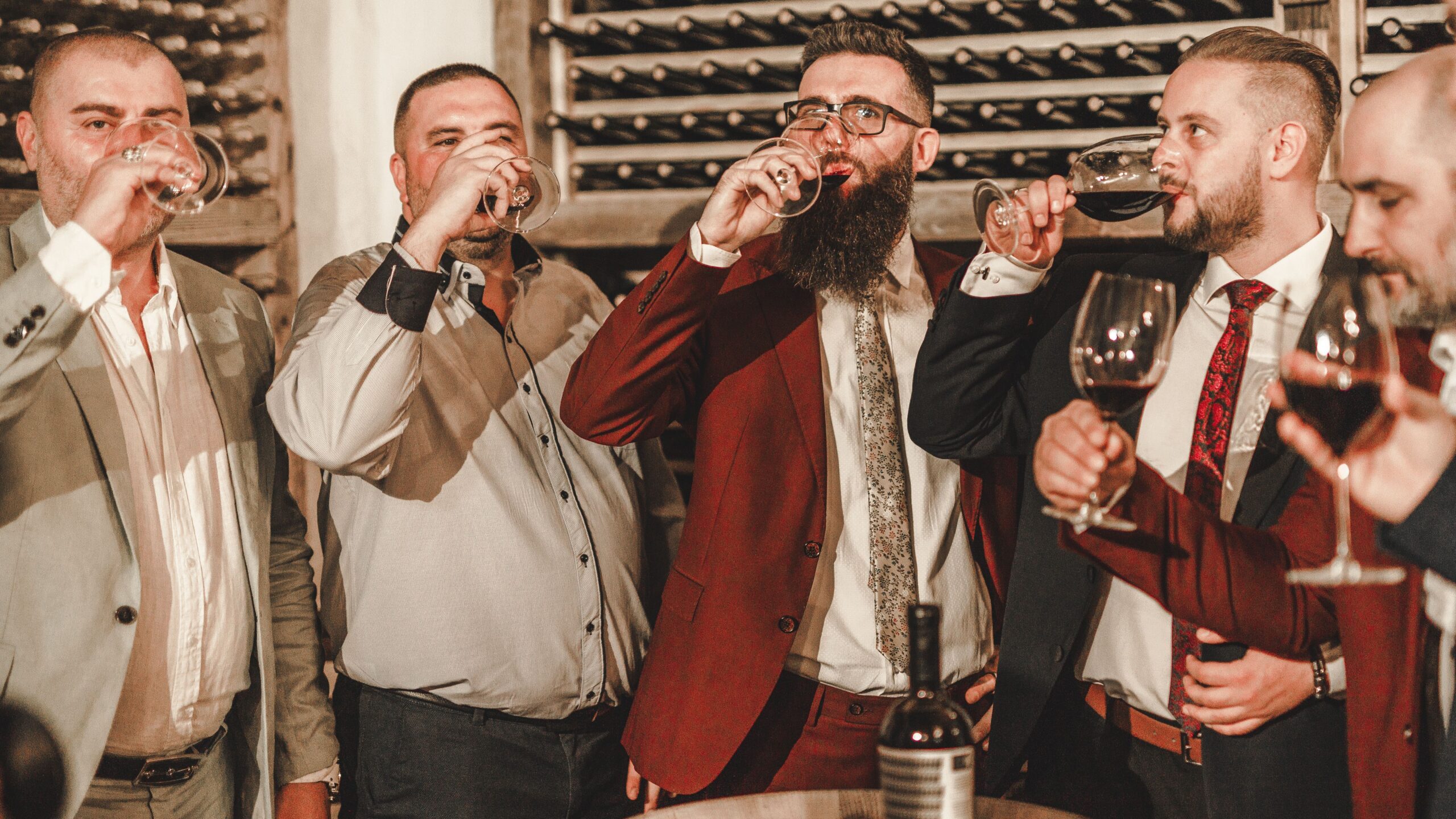
A guided tasting led by a sommelier encourages conversation by giving guests a shared sequence of observations without requiring them to arrive with technical knowledge. The sommelier can introduce one comparison at a time, ask guests to identify aroma or texture, and then connect the wine to a region, grape variety, production method, or food. This structure replaces awkward opening questions with a common subject that everyone can discuss.
The presenter should explain the purpose of each wine before describing it. For example, a flight might compare sparkling wines made by different methods, white wines from contrasting climates, or the same grape variety from two wine regions. Guests then have a reason to ask questions beyond “Do you like it?” They can discuss acidity, climate, farming, price positioning, or how the style might perform in a restaurant or corporate setting.
Keep the guided flight short enough to protect the networking objective. Four to six wines create clear points of comparison without turning the evening into a lecture. The sommelier should alternate between concise explanations and open questions such as, “Which wine would you serve at a client lunch?” or “Which style would work best with spicy food?” The question must produce a business or social conversation, not merely test recall.
“Wine Enthusiast’s professional blind tastings are conducted in groups of 5 to 8 wine samples, with producers and suggested retail prices concealed from reviewers.” — Journal of Wine Economics, 2024.
When should you use a blind tasting, guessing game, or scoring competition?
Use a blind tasting when you want guests to compare sensory characteristics before reputation, label design, producer identity, or price influences their judgments. Remove the competitive pressure for a mixed corporate audience, however, because some guests may feel exposed if the activity rewards specialist knowledge. A well-designed blind tasting asks participants to notice differences, not to prove that they can identify a grape or country.
A guessing game works best when the answer is secondary to the discussion. Conceal three wines and ask teams to choose between broad categories such as Old World or New World, sparkling or still, or cool climate or warm climate. The sommelier can reveal the answers and explain the clues without treating incorrect guesses as failures.
Use scoring competitions for groups that enjoy structured participation, including sales teams, hospitality professionals, wine clubs, and internal corporate communities. The Princeton Wine Group’s published record includes 244 blind tastings involving 1,708 different wines, while its analysis emphasizes that tasters can form different opinions because they value acidity, tannin, aroma, fruit, and other attributes differently. That evidence supports a scoring sheet that records individual preference alongside group results rather than presenting one universal ranking as objective truth.
- Present the tasting question before pouring.
- Give each team a simple scorecard with no more than four criteria.
- Allow private scoring before group discussion.
- Reveal the wines only after guests have exchanged observations.
- Reward the best reasoning, most accurate identification, or strongest pairing logic, depending on the event objective.
How can wine pairing with cheese, chocolate, or other foods add structure?
Wine pairing adds structure by giving each tasting round a sensory reference point. Cheese can highlight acidity, salt, creaminess, and tannin. Chocolate can create a conversation about sweetness, bitterness, texture, and serving temperature. Savory canapés, fruit, cured foods, and spiced dishes allow the sommelier to explain why a wine feels balanced, sharp, soft, rich, or refreshing in combination with food.
Pair one food with one wine or one flight segment, rather than presenting a crowded buffet with no connection between dishes and bottles. A crisp sparkling wine with a salty canapé creates a different discussion from a full-bodied red with aged cheese. The pairing should also be portioned carefully, because large servings shift attention from the networking event to dinner and complicate timing.
For corporate audiences, pairing creates a useful bridge between personal preference and professional application. Ask guests to choose the best wine for a reception, product launch, client dinner, or restaurant menu. This approach turns tasting vocabulary into a practical decision and allows participants from different industries to contribute equally.
Wine Selection for Networking: Regions, Styles, Accessibility, and Professional Appeal
Should the tasting focus on grape variety, country, wine regions, or food pairing?
A wine tasting for networking should use one clear organizing idea, because a coherent theme makes introductions, questions, and follow-up conversations easier. A grape-variety theme suits beginners who want to understand recognizable styles. A country or regional theme works well for brand storytelling. A food-pairing theme gives the event a practical rhythm. A production-method theme, such as traditional-method sparkling wine, creates a stronger technical narrative for professional audiences.
Choose the theme according to what guests need to discuss after the event. If the objective is international business, compare wine regions and their market identities. If the objective is hospitality networking, pair styles with menus. If the objective is brand awareness, build the sequence around a producer, vineyard, or distinctive origin story. Avoid mixing unrelated bottles simply because they are individually impressive; the collection should make sense as a conversation.
| Theme | Best networking use | Conversation prompts |
|---|---|---|
| Grape variety | Beginner education and easy comparison | How does climate change the same grape? |
| Country or region | International business and place-based storytelling | What makes this region commercially distinctive? |
| Food pairing | Hospitality, culinary, and client entertainment audiences | Which pairing would you serve at a corporate dinner? |
| Production method | Technical audiences and premium brand positioning | How does production affect texture and price? |
| Style and occasion | Broad corporate groups with mixed experience | Which bottle fits a reception, lunch, or celebration? |
Which wines work best for beginners, including sparkling wine, rosé, Champagne, and accessible styles?
Beginner-friendly selections should offer immediate sensory clarity, moderate complexity, and enough contrast for guests to describe differences without specialist terminology. Sparkling wine, fresh white wine, rosé, lighter reds, and one more structured red can create a progression from refreshing to fuller-bodied. The sequence should move from lighter, more delicate styles toward richer wines so that later pours do not overwhelm earlier comparisons.
ProWein’s 2025 Business Report found that 73% of 1,398 international wine-business experts expected white wine to perform well in 2025 and 2026, compared with 71% for sparkling wine and 65% for low-alcohol wine. Those figures do not dictate a tasting menu, but they support a selection strategy that gives white, sparkling, and lower-alcohol options a serious place in a contemporary professional event.
Include Champagne when the event needs a recognized premium reference point, but place it beside another sparkling wine that encourages comparison rather than treating the name as the entire experience. Rosé can help bridge guests who prefer white or red styles, while an accessible Sauvignon Blanc, Chardonnay, Pinot Noir, or Merlot gives participants familiar reference points. Provide a non-alcoholic or low-alcohol alternative that receives the same level of explanation and glassware service as the alcoholic wines.
IWSR reported that across eight major markets, 60% of no- and low-alcohol wine buyers were Gen Z or Millennials; the share reached 73% in the United States and 67% in the United Kingdom. The inclusion of lower-alcohol choices therefore supports both hospitality and audience relevance, especially when guests may be driving, working the next morning, or moderating their intake.
How can examples such as Chapel Down and Champagne create memorable discussion points?
Chapel Down and Champagne create memorable discussion points when the host uses them to compare origin, method, climate, branding, and occasion. Chapel Down’s official tasting information describes its Brut as a blend of Chardonnay, Pinot Noir, Pinot Meunier, and Pinot Blanc, with apple, citrus, strawberry, and persistent bubbles. Its estate also presents guided tours and tastings focused on English vineyards, grape harvest, and traditional-method sparkling production.
Serve Chapel Down alongside Champagne and ask guests to compare freshness, mousse, fruit profile, texture, perceived richness, and brand associations. The point is not to declare one category superior. The comparison gives a mixed audience several entry points: geography for travelers, production for technical professionals, price and positioning for buyers, and storytelling for marketers.
Use a recognizable producer as an anchor, then add one less familiar wine to create discovery. A memorable flight might include a traditional-method English sparkling wine, Champagne, a still white from a cool climate, and a rosé chosen for food compatibility. Each bottle should answer a different question, and each question should lead naturally to a new conversation partner.
Networking-First Agenda: A Run-of-Show for Mingling, Tasting, and Follow-Up
What should happen before the tasting: welcome drinks, introductions, and conversation prompts?
The pre-tasting period should lower social friction before the formal presentation begins. Offer one welcome drink, display name badges with organization and role, and station hosts near the entrance to introduce guests who have a clear reason to meet. The welcome wine should be approachable and served in a controlled quantity so that guests can converse comfortably without rushing into the main flight.
Conversation prompts should connect people to the event’s objective. Useful questions include, “Which market or client group are you working with this year?”, “What kind of wine experience does your audience respond to?”, and “Which region would you like to understand better?” Avoid prompts that require guests to disclose confidential business information or defend their level of wine knowledge.
Keep formal speeches short before the first pour. A host can explain the purpose, introduce the sommelier, and tell guests how the rotations will work in under five minutes. If attendees need to know where to sit, when to move, or how to record contacts, explain those mechanics before the tasting starts, not during the first wine.
How should guests rotate conversations during the guided tasting?
Guests should rotate in short, planned intervals so that the tasting creates repeated contact without making conversations feel mechanical. For a group of 24, use four tables of six and rotate two or three people after each wine or discussion round. For a smaller group, assign mixed seating at the beginning and change seats once midway through the flight.
Bizzabo’s 2025 survey found that 87% of organizers considered networking very important to the success of their in-person events, while only 53% of attendees said their events included structured networking tools or opportunities. A wine tasting can close that gap with simple physical design: named tables, timed rounds, host-led introductions, and a visible rotation signal.
| Time | Activity | Networking purpose |
|---|---|---|
| 0:00–0:20 | Arrival and welcome drink | Hosts identify priority introductions and absorb late arrivals |
| 0:20–0:25 | Welcome and event objective | Give guests a common reason to participate |
| 0:25–0:45 | First guided wines | Create an easy shared subject for conversation |
| 0:45–0:50 | Conversation rotation | Move guests toward new contacts |
| 0:50–1:10 | Pairing or blind challenge | Encourage collaboration and reveal shared interests |
| 1:10–1:25 | Open networking | Allow guests to continue the most relevant conversations |
| 1:25–1:35 | Final reveal and closing prompt | Convert tasting discussion into a practical next step |
Give each table one question rather than a long worksheet. Examples include, “Which wine would suit a first meeting with a new client?” or “Which producer story would your audience remember?” A single question creates enough structure to engage quieter guests while leaving room for spontaneous conversation.
When should attendees exchange contact information, join structured activities, and reconnect afterward?
Attendees should exchange contact information after a meaningful point of agreement, not immediately after saying hello. The best moment usually follows a shared tasting observation, a useful introduction, or a specific discussion about a client, market, supplier, or future collaboration. Hosts can support this moment by asking, “Would you like me to connect you after the event?” rather than forcing every guest into a mass exchange.
Place the structured activity in the middle of the event, when guests have already met at least one person but still have energy to participate. A blind tasting, pairing challenge, or regional quiz works better before the final open networking period, because the activity supplies fresh discussion points for the last round of conversations.
Follow-up should happen while the interaction remains specific. Bizzabo reported that 92% of attendees had followed up with someone they met through an event networking feature, yet 34% said nothing meaningful came from the interaction. The practical response is to record the context of each connection, such as “send Champagne comparison,” “introduce to hotel buyer,” or “share regional wine list,” instead of storing an unexplained name in a database.
- Send a short post-event message within two business days.
- Refer to the specific wine, pairing, or business topic discussed.
- Deliver the promised introduction, document, or recommendation.
- Invite the contact to a relevant future conversation only after completing the first action.
The most advanced version of a wine tasting networking event treats the agenda as a connection system rather than a drinking schedule. The next design question is therefore not how many bottles guests can taste, but which structured comparison will give the right people a credible reason to continue speaking after the final pour.