Wine Tasting Networking Event: Planning, Format, ROI
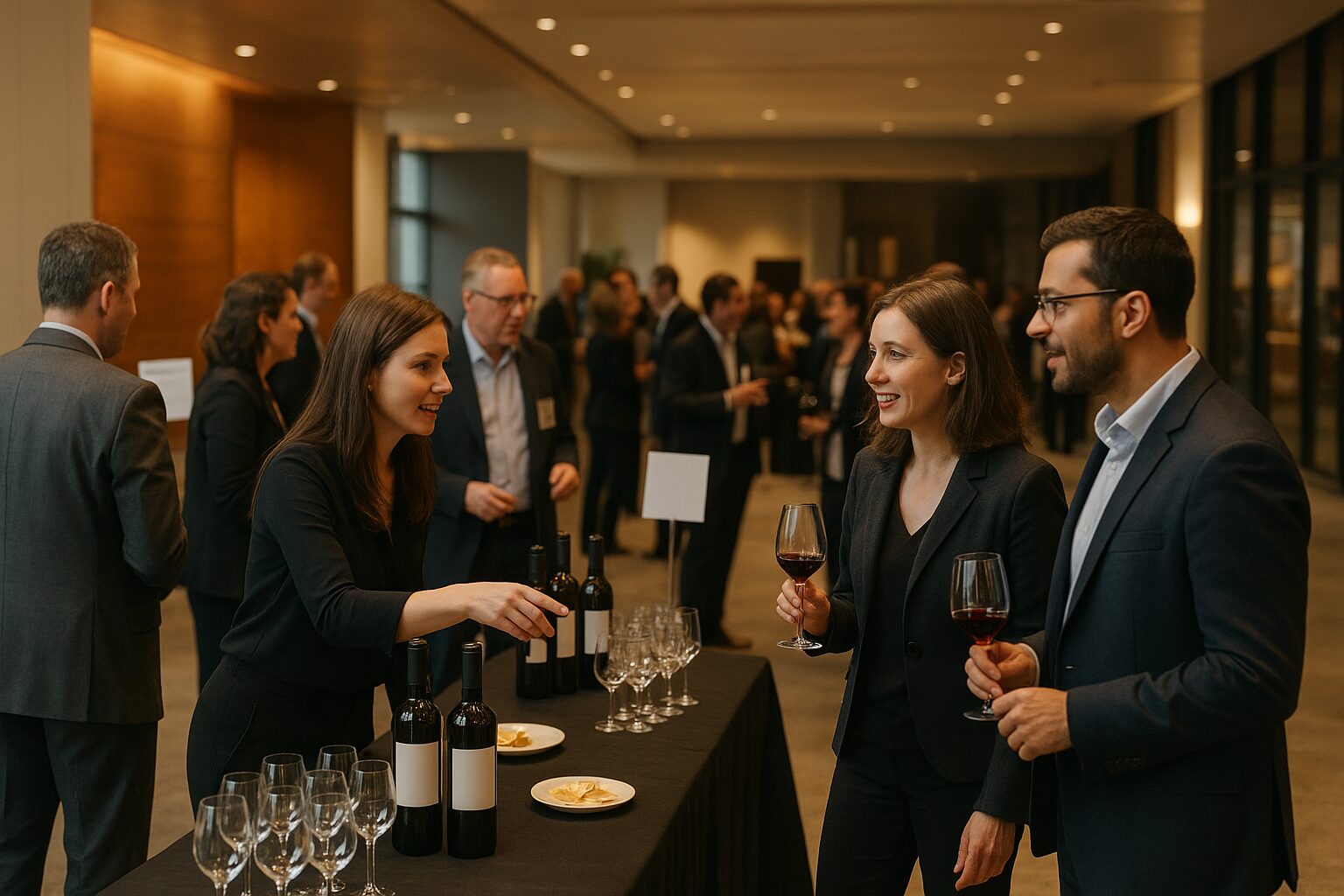
A wine tasting networking event combines guided wine sampling with a deliberate structure for professional introductions, relationship-building, client engagement, or community development. Unlike a generic networking reception, the tasting gives guests a shared subject, a sequence of conversation prompts, and natural reasons to move between groups.
This guide covers the planning path from objectives and guest profile to wine selection, venue design, agenda, food pairing, gamification, hybrid delivery, responsible drinking, measurement, and follow-up. For a broader look at event outcomes and format choices, see Wine Tasting Networking Event.
What should the event achieve: client engagement, sales, brand awareness, or community-building?
A wine tasting networking event should pursue one primary business outcome and use wine as the social structure that makes that outcome easier to achieve. Client engagement requires relaxed conversation between hosts and existing customers; sales events need qualified introductions and a clear handover process; brand-awareness events benefit from distinctive wines, visual storytelling, and memorable regional themes; community-building events depend on repeat attendance and inclusive participation.
Write the desired post-event action before choosing the wine list. Should a guest book a follow-up meeting, meet a potential supplier, understand a new brand, join a professional community, or return for the next edition? That single answer determines the invitation, host briefing, seating plan, registration questions, and follow-up message.
| Primary objective | Useful event design | Possible measurement |
|---|---|---|
| Client engagement | Small guided flight, host introductions, quiet seating | Quality conversations, meeting requests, client feedback |
| Sales development | Timed rotations, sector matching, permission-based follow-up | Qualified leads, demonstrations booked, opportunities created |
| Brand awareness | Distinctive region or producer theme, visual storytelling | Content mentions, branded searches, post-event recognition |
| Community-building | Repeatable format, inclusive prompts, low-pressure participation | Return attendance, referrals, member participation |
| Milestone celebration | Premium bottle, short remarks, memory-rich entertainment | Attendance, guest sentiment, internal engagement |
A corporate event also needs a boundary between hospitality and presentation. A short welcome can establish the sponsor’s purpose, but a long sales talk interrupts the conversations the evening was designed to create. Let the sommelier explain the wines while the commercial team listens, qualifies interest, and introduces relevant colleagues.
How do guest count, budget, date, and venue shape the format?
Guest count determines whether the event should feel intimate, rotational, or exhibition-style. A group of 12 to 24 can share one guided table. A group of 25 to 60 usually needs tasting stations or two facilitated groups. Larger events require duplicate wine flights, timed rotations, multiple hosts, and clear directional signage.
Budget changes the experience through service design as much as bottle price. A smaller wine list with strong facilitation and satisfying food can produce better conversations than a costly flight served without context. Allocate the budget across the elements guests directly experience:
- Venue hire, furniture, lighting, and service staff.
- Wine, glassware, refrigeration, transport, and corkage.
- Food pairings, dietary alternatives, water, and palate cleansers.
- Sommelier or host fees, registration, signage, photography, and entertainment.
- Accessibility, transport support, insurance, permits, and contingency costs.
Choose the date around the audience rather than the organiser’s calendar. An after-work event near offices suits professional networking. A weekend vineyard visit supports education and destination branding. A breakfast or lunch tasting may work better for guests who avoid evening alcohol, while a client dinner allows a slower premium experience.
| Planning variable | Best-fit format | Operational consequence |
|---|---|---|
| 12–24 guests | Single guided flight | One sommelier, shared discussion, seated or semi-seated layout |
| 25–60 guests | Stations or two tasting groups | More glassware, duplicate bottles, visible signage, timed movement |
| Limited budget | Three-wine flight with one substantial pairing | Spend on facilitation and food structure rather than excessive variety |
| Premium client event | Regional comparison or prestige flight | Controlled service, branded menus, quieter venue, stronger host-to-guest ratio |
| 60+ guests | Exhibition tasting with timed micro-sessions | Multiple pour points, host teams, crowd-flow plan, larger stock buffer |
Record the final capacity after adding furniture, service points, coats, water stations, food tables, spittoons, and circulation paths. A venue’s advertised capacity rarely reflects the space required for comfortable conversation.
Which professional and corporate audiences fit a wine tasting?
Wine tasting suits audiences that benefit from informal conversation, shared discovery, or relationship maintenance. Suitable groups include existing clients, hospitality professionals, luxury and lifestyle brands, property firms, financial-services teams, creative agencies, international chambers, executive networks, alumni groups, investors, suppliers, and cross-company professional communities.
Define the guest profile in operational terms:
- Relationship stage: prospects, new clients, established clients, partners, members, or alumni.
- Professional mix: one sector, complementary sectors, or a deliberately cross-industry audience.
- Seniority: founders, department heads, buyers, technical specialists, or emerging professionals.
- Wine experience: complete beginners, confident drinkers, hospitality experts, or a mixed group.
- Conversation need: referrals, investment, hiring, procurement, education, or community connection.
Guests need a credible reason to meet one another. Segment invitations by industry, seniority, geography, or shared interest, then ask one useful registration question: “Which market, capability, or professional challenge are you trying to understand?” That answer gives hosts a bridge for introductions.
Wine Tasting Formats: Guided Flight, Blind Tasting, Pairing, and Team Challenges
How does a guided tasting led by a sommelier encourage conversation?
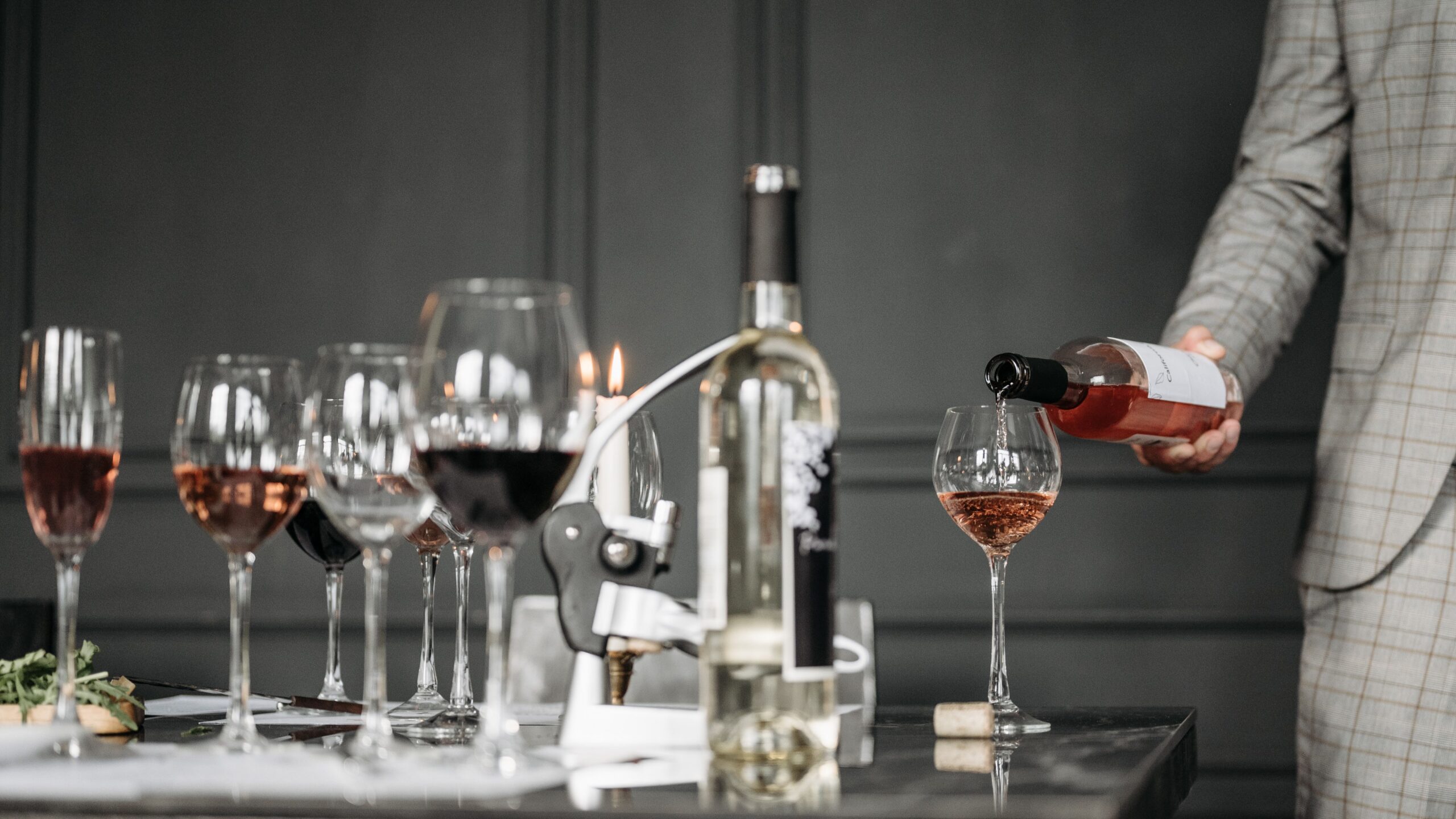
A guided tasting encourages conversation by giving guests a shared sequence of observations, vocabulary, and questions. The sommelier introduces each wine briefly, pours a controlled flight, explains one or two relevant features, and then turns attention back to the group. The host should teach without making beginners perform expertise.
Use prompts that connect sensory experience with professional memory:
- “Which wine would you serve at a client lunch?”
- “Which style fits your brand or working culture?”
- “What food would make this wine more useful in hospitality?”
- “Which wine would you choose for a celebration, and why?”
The sommelier should speak in short intervals. A practical rhythm is two minutes of framing, three minutes of tasting, four minutes of paired discussion, and two minutes of group feedback. Guests who prefer to listen can use scoring cards, while confident speakers receive prompts that bring quieter participants into the exchange.
When should you use a blind tasting, guessing game, or scoring competition?
Use a blind tasting when curiosity and comparison matter more than immediate brand recognition. Conceal the producer, region, grape, or price when you want guests to discuss aroma, texture, acidity, tannin, sweetness, or finish before reputation influences the conversation.
A blind round should remain light at a networking event. Use three or four wines, one clear question, and a scoring method that rewards observation rather than technical accuracy. Guests can earn points for identifying a broad style, describing an aroma vividly, suggesting a food match, or asking a strong question.
A guessing competition creates energy, but it can also make beginners retreat if the rules reward specialist knowledge. Offer team scoring, allow “unsure” answers, and reveal the reasoning after each round. The goal is shared discovery, not a public test.
Facilitator prompt: “You do not need to name the grape. Describe what you notice, then decide which occasion suits the wine.”
How can food pairing with cheese, chocolate, or other foods add structure?
Food pairing adds a second variable that guests can compare with the wine. Cheese introduces salt, fat, texture, and acidity. Chocolate brings sweetness and bitterness. Fruit, cured fish, spiced dishes, nuts, savoury pastries, and plant-based canapés create further contrasts without requiring a formal meal.
- Serve the wine without food and record the first impression.
- Add one controlled bite and taste the wine again.
- Ask each group what changed: freshness, bitterness, weight, aroma, or finish.
- Reveal the pairing logic only after guests compare their observations.
Sequence pairings from delicate to intense. Keep allergen labels beside every dish and provide an equivalent alternative rather than a token substitute. Food should support conversation, not force guests to balance plates, glasses, notebooks, and business cards at once.
Can cocktails or entertainment strengthen the networking format?
Cocktails and entertainment work when they create a shared task or a short reset between tasting rounds. A cocktail-making class as a networking activity gives guests a practical collaboration task: measure, mix, taste, and compare. Keep the class alcohol-aware by offering a zero-proof version and avoiding a race to produce the strongest drink.
Live performances, interactive exhibits, short talks, and producer demonstrations can add a memorable layer. The annual Singapore Networking Night is a useful named example of a cross-industry networking program built around business-trend learning, live performances, interactive exhibits, and engaging talks. By contrast, Networking with a Twist, organised by The Networked Group, uses team-building games, treasure hunts, and a cocktail-making class to make interaction the central experience.
Borrow the principle, not the spectacle: choose one programmed attraction that helps guests speak to one another. A ten-minute demonstration usually supports networking better than an hour-long performance that turns attendees into a silent audience.
Wine Selection for Networking: Regions, Styles, Accessibility, and Professional Appeal
Should the tasting focus on grape variety, country, region, or food pairing?
The strongest theme gives guests an easy comparison and a memorable reason to continue talking. A grape-variety flight compares how one grape behaves across climates. A country or regional flight turns geography, culture, and production into conversation. A food-pairing flight makes the event immediately practical. Choose one central axis and use the other dimensions as supporting detail.
| Theme | Conversation prompt | Best use |
|---|---|---|
| Grape variety | How does the same grape change across climates? | Education and sensory comparison |
| Country or region | What does place contribute to style and identity? | Brand storytelling and cultural networking |
| Food pairing | Which combination would you choose for a client meal? | Hospitality, sales, and practical engagement |
| Production method | How does the method affect texture and aroma? | Blind tasting and technical curiosity |
| Price or positioning | What makes a bottle suitable for this occasion? | Procurement, retail, and commercial discussion |
Give each bottle one repeatable story: a climate contrast, grape decision, production choice, regional identity, or food connection. “This wine comes from a cool maritime site and keeps a bright citrus-led profile” travels more effectively through a networking room than a long list of vineyard statistics.
How many wines should a corporate tasting include?
A practical corporate flight contains four to six wines, while a networking-first event often works better with three to five. Fewer wines leave more time for conversation and reduce service complexity. More wines create comparison but can crowd out introductions, food, and follow-up planning.
Build the sequence around contrast:
- Opening: sparkling wine or a fresh white that welcomes a mixed-experience audience.
- Discovery: an aromatic white, rosé, or distinctive regional style.
- Bridge: a textured, food-friendly wine that supports discussion.
- Depth: an approachable red, lightly chilled red, or premium comparison.
- Optional finale: a special bottle, fortified wine, or no- and low-alcohol alternative.
Serve modest tasting pours, make water and spittoons visible, and explain that guests may discard wine. A tasting is an evaluation format, not a requirement to finish every pour.
Which wines work for beginners, including sparkling wine, rosé, Champagne, and accessible styles?
Beginner-friendly flights combine familiar formats with clear differences in freshness, texture, aroma, and weight. One sparkling wine, one fresh white, one rosé, and one approachable red create variety without overwhelming guests with technical categories.
Offer a credible no- or low-alcohol alternative alongside full-strength wines. Label it clearly and serve it in equivalent glassware so moderation does not become a visible status difference. Include still and sparkling water, food, and a discreet alcohol-free route throughout the event.
Think about the audience’s vocabulary. Describe a wine as crisp or rounded before introducing acidity; explain grip before tannin; use “dry” to describe sweetness rather than strength. Guests can learn technical terms after they have a sensory reference.
How can Chapel Down and Champagne create a memorable comparison?
Chapel Down and Champagne create a useful comparison because both can introduce traditional-method sparkling wine while opening different conversations about place, identity, and terminology. Chapel Down’s product information describes its Brut as a blend of Chardonnay, Pinot Noir, Pinot Blanc, and Pinot Meunier sourced from vineyards in Kent, Sussex, and Essex. A facilitator can use that blend to discuss English wine, climate, fruit profile, and brand positioning.
Champagne adds a precise geographical and appellation discussion. Ask guests to compare acidity, fruit profile, texture, origin, and production story rather than treating “Champagne” as a generic word for sparkling wine. Which bottle suits a product launch? Which works with salty food? Which story would resonate with an international client?
Use the comparison as a conversation device, not a prestige hierarchy. A regional English sparkling wine can create a discussion about emerging wine destinations; Champagne can prompt questions about heritage, protected naming, and customer expectations.
Networking-First Agenda: A Run-of-Show for Mingling, Tasting, and Follow-Up
What should happen before the tasting?
The pre-tasting period should create low-pressure introductions before guests receive technical information. Allow 20 to 30 minutes for arrival, registration, a welcome pour, and informal movement. Use readable name badges, place hosts at the entrance, and add one prompt to each badge or table.
Hosts should make the first introductions. Connect two guests through a shared sector, complementary expertise, common market, or registration response. Avoid introducing six people at once; two- or three-person introductions give everyone enough context to continue speaking.
Keep the opening pour easy to serve and easy to discuss. A dry sparkling wine, fresh white, or rosé offers a clear opening style. Put water and discard vessels in view from the start so guests understand the event’s tasting culture.
How should guests rotate conversations during the guided tasting?
Guests should rotate after each wine or paired flight, with the facilitator announcing movement in one simple instruction. For 36 guests, six tables of six can exchange one or two members after every round. For 20 guests, four tables of five can rotate selected guests while the sommelier remains central.
- Round one: Introduce yourself through your role, market, or professional interest.
- Round two: Compare the wine’s style and choose a practical serving occasion.
- Round three: Discuss the pairing, producer story, or regional contrast.
- Final discussion: Identify one person you want to continue speaking with.
Give each round a different prompt so the conversation develops instead of repeating introductions. The sommelier can speak for two or three minutes, then release guests into five minutes of discussion. Hosts should listen for unanswered questions, include quieter participants, and redirect monologues without embarrassing the speaker.
What does a 90-minute run-of-show look like?
A 90-minute agenda can balance arrival, guided tasting, movement, and contact exchange without rushing the final conversation.
| Time | Activity | Purpose |
|---|---|---|
| 00:00–00:20 | Arrival, registration, welcome pour | Settle guests and begin informal introductions |
| 00:20–00:27 | Host welcome and event objective | Explain why the group has been brought together |
| 00:27–00:39 | Wine one and paired discussion | Give guests shared vocabulary and an easy opening prompt |
| 00:39–00:51 | Wine two and table rotation | Expand the network beyond the first conversation |
| 00:51–01:03 | Food-pairing challenge | Create a collaborative, memorable activity |
| 01:03–01:15 | Wine three or blind round | Add curiosity and playful comparison |
| 01:15–01:25 | Final tasting and introductions | Connect guests with relevant people and hosts |
| 01:25–01:30 | Next-step prompt and close | Make follow-up permission and action explicit |
When should attendees exchange contact information and reconnect afterward?
Contact exchange should follow a meaningful conversation, not the first handshake. Place a five-minute connection window after the final tasting, when guests share a reference point and can identify the people they genuinely want to meet again.
Use a permission-based capture process. A registration platform can let guests select sectors, interests, and follow-up preferences; hosts can record conversation context rather than collecting names without purpose. A useful follow-up note might say, “You discussed export partnerships with Maya; she agreed to receive your briefing.”
Send the follow-up within 24 to 72 hours. Include the tasting sheet, a relevant pairing reference, a direct introduction, or a proposed meeting time. A generic thank-you message wastes the context the event worked to create.
Venue, Staffing, Materials, and Service Design
What makes a venue suitable for a wine tasting networking event?
A suitable venue supports conversation, controlled service, accessible movement, and safe transport. Options include a vineyard, winery, urban wine bar, hotel private room, restaurant, gallery, members’ club, conference venue, or online platform with shipped tasting kits.
Inspect the venue at the same time of day as the proposed event. Check sound, lighting, temperature, toilets, step-free access, coat storage, parking, public transport, taxi pickup, refrigeration, glassware, food preparation, and noise from adjacent rooms.
- Place registration away from the first tasting station so arrivals do not create a queue.
- Keep water and discard vessels within easy reach of every group.
- Use high tables for movement and small rounds for deeper conversations.
- Separate food service from the main pour point to reduce congestion.
- Provide a quieter corner for guests who need a break from music or crowd noise.
- Position signage at decision points rather than covering every wall with branding.
A vineyard can create a welcome change of scene and support destination storytelling. A chic urban wine bar reduces travel friction and may suit a small client dinner. A conference venue offers reliable capacity but needs stronger theming to avoid the feel of a standard corporate meeting.
What staff and suppliers does the event need?
A well-run tasting assigns ownership for hospitality, education, movement, safety, and follow-up before guests arrive. The core team usually includes an event lead, sommelier or wine educator, registration host, floor hosts, food-service lead, venue contact, and a responsible-drinking lead.
| Role | Primary responsibility |
|---|---|
| Event lead | Run-of-show, suppliers, budget, escalation, and timing |
| Sommelier or educator | Wine narrative, tasting guidance, questions, and service rhythm |
| Floor hosts | Introductions, rotations, inclusion, and conversation prompts |
| Registration host | Check-in, badges, dietary notes, and contact permissions |
| Food-service lead | Pairing sequence, allergen labels, replenishment, and alternatives |
| Safety lead | Water, discard options, transport information, and incident response |
Which tasting materials and palate-management supplies should be provided?
Every guest should receive the materials needed to taste, compare, record, and participate comfortably. Prepare tasting sheets, pens, name badges, table prompts, water glasses, spit cups or spittoons, napkins, bread or neutral palate cleansers, allergen cards, wine menus, and accessible digital copies.
Number wines consistently across bottles, menus, and tasting sheets. If a blind round uses codes, keep the code key with the sommelier and service team. Avoid elaborate worksheets that turn a social event into an exam; provide three or four useful fields such as aroma, texture, preferred occasion, and conversation note.
How should sustainability shape event planning?
Sustainability planning reduces waste through accurate attendance forecasting, reusable serviceware, efficient transport, and deliberate purchasing. Confirm final numbers before ordering, select producers with credible environmental practices, use returnable or reusable glassware, consolidate deliveries, and donate or redirect suitable surplus food according to local rules.
Digital tasting sheets reduce printing, but keep a small accessible paper supply. Serve wine in measured pours, store unopened bottles correctly, and avoid decorative materials that cannot be reused. Ask the venue how it handles food waste, glass, refrigeration, and energy before signing the contract.
Virtual, Hybrid, Premium, and Themed Wine Tasting Events
How can a virtual or hybrid tasting preserve networking?
A virtual or hybrid format preserves networking when organisers distribute consistent wine kits and create small-group interaction instead of broadcasting a long presentation. Send identical or clearly substituted bottles, tasting sheets, food-pairing guidance, glassware instructions, water reminders, and discard guidance before the event.
Use a short central welcome followed by moderated breakout rooms. Each room needs a host, a time limit, a prompt, and a clear return point. Ask remote guests to introduce their role and market before discussing the wine; otherwise the conversation can drift into unstructured personal chat.
- Confirm delivery addresses, allergies, alcohol preferences, and local purchasing restrictions.
- Ship kits early enough to handle missed deliveries and damaged bottles.
- Provide a zero-proof alternative and explain substitutions clearly.
- Test the video platform, camera angle, audio, lighting, and breakout controls.
- Rotate breakout groups and capture opt-in follow-up interests.
Hybrid events need equal status for remote guests. Place a moderator beside the in-person sommelier, read remote questions aloud, and avoid side conversations that cannot be heard online.
Which premium or VIP elements add value?
Premium elements add value when they improve access, context, or comfort rather than simply increasing bottle price. Consider a smaller host-to-guest ratio, reserved seating, a producer-led masterclass, cellar access, a rare-vintage comparison, bespoke menus, chauffeured transport, or a private post-tasting dinner.
Separate VIP hospitality from the main networking purpose with care. A private room may help a key client, but an isolated VIP group can weaken cross-network exchange. Use premium access as a bridge: invite VIP guests to a short producer conversation, then return them to the wider room for curated introductions.
How should an event theme shape the wine list?
A theme should make the event easier to remember and easier to explain in the invitation. Strong themes include “Coastal Wines and Global Trade,” “Old World Versus New World,” “The Wines Behind Hospitality,” “English Sparkling and Champagne,” or “One Grape, Four Climates.”
A theme needs three connected layers:
- Wine: bottles that demonstrate the central comparison.
- Conversation: prompts that translate the theme into professional relevance.
- Environment: menus, maps, projection, food, music, or producer stories that reinforce the idea.
Do not force every detail to match. A restrained theme creates a coherent atmosphere; an over-decorated room can make a professional event feel theatrical.
The Operational Edge: Safety, Accessibility, Follow-Up, and Common Failure Points
How should organisers manage responsible drinking and attendee safety?
Responsible drinking requires choice, visibility, pacing, and transport support throughout the event. Offer water and food from arrival, explain tasting and spitting without embarrassment, keep pours measured, provide alcohol-free options, and avoid language that pressures guests to finish a glass.
Ask the venue about licensing, service procedures, incident escalation, first aid, and transport options. Publish public-transport information, taxi contacts, rideshare pickup points, or a company travel policy. Never use wine as a condition of participation or make alcohol the reward for completing a game.
Accessibility extends beyond physical access. Provide large-print or digital materials, captioned virtual content, non-alcoholic pairings, clear allergen information, seating for guests who need it, and a quiet area. Let guests choose whether they want technical discussion, casual conversation, or neither.
What are the most common planning mistakes?
The most damaging mistakes confuse wine quality with event quality. An expensive bottle cannot repair poor introductions, weak sound, inaccessible seating, or an agenda that leaves no time for conversation.
- Too many wines: guests remember fatigue rather than contrast.
- Long speeches: the event becomes a presentation instead of a networking experience.
- Unmanaged movement: guests lose time and return to the same people.
- Technical jargon: beginners stop contributing.
- No dietary planning: food becomes exclusionary or unsafe.
- Invisible alcohol-free choices: moderation feels like opting out.
- Unclear follow-up: useful conversations disappear after the final pour.
- Weak host briefing: staff talk about the sponsor instead of discovering guest needs.
Run a 15-minute pre-event briefing. Give each host the guest list, priority introductions, three prompts, the rotation plan, escalation contact, and follow-up process. Then ask: Who has not spoken yet, and which two people should meet before the next round?
How should organisers measure whether networking produced results?
Measure both interaction quality and commercial or community outcomes. Attendance alone shows reach, not relationship value. Track registration source, attendance rate, participation in activities, opt-in contact exchanges, introductions completed, follow-up replies, meetings booked, referrals, repeat attendance, and post-event satisfaction.
| Stage | Metric | What it reveals |
|---|---|---|
| Before | Registration by segment and stated interest | Whether the guest mix supports the objective |
| During | Rotations completed and activity participation | Whether the format distributes interaction |
| Immediately after | Opt-in introductions and selected follow-up topics | Whether conversations had practical relevance |
| Within 30 days | Meetings, referrals, opportunities, or repeat bookings | Whether the event changed behaviour |
| Next edition | Returning guests and referral attendance | Whether the format created durable community value |
Ask one short feedback question that produces usable evidence: “Which conversation or activity would you repeat?” Add a second question about friction, such as noise, timing, accessibility, food, or wine knowledge. Review responses against the original objective rather than chasing every positive comment.
What should organisers know about wine storage before the event?
Wine should be stored and served under conditions that protect its intended character. Keep bottles away from direct sunlight, heat sources, vibration, and last-minute temperature shocks. Coordinate delivery with the venue so bottles do not sit unattended in a warm loading area.
For organisers using a private cellar or wine room, monitor both temperature and moisture. Excess moisture can damage labels, packaging, fixtures, and stored materials even when the bottles remain drinkable. Use this practical guide to Wine Cellar Humidity when a storage space develops high moisture before an event.
What should a corporate wine tasting budget include?
A complete budget includes every guest-facing and risk-related cost, not just wine and venue hire. Build the estimate in these categories:
- Venue, furniture, cleaning, staffing, licensing, and security.
- Wine, tax, corkage, delivery, refrigeration, glassware, and breakage.
- Food, dietary alternatives, water, coffee, palate cleansers, and service.
- Sommelier, producer, moderator, photographer, entertainment, and AV fees.
- Invitations, registration software, badges, menus, signage, and digital content.
- Transport assistance, accessibility provisions, insurance, contingency, and post-event follow-up.
Protect the facilitation budget first. A knowledgeable guide and prepared hosts shape the experience more directly than a fifth luxury bottle. If costs rise, reduce variety, simplify décor, or shorten the programme before removing water, food, staff, or accessibility support.
FAQ: Corporate Wine Tasting Networking Events
How long should a wine tasting networking event last?
Plan 90 minutes for a compact event and two to three hours for a tasting combined with dinner, a talk, or a vineyard visit. The right length depends on travel, guest seniority, food service, number of wines, and whether the event needs formal introductions. Protect a dedicated arrival period and a final connection window.
Is a guided or self-guided tasting better for networking?
A guided tasting usually suits networking because the sommelier creates a common starting point and keeps the room moving. A self-guided format offers freedom and may work for experienced drinkers, but organisers must add station cards, prompts, hosts, and a rotation plan or guests may cluster with familiar colleagues.
Should a networking event serve Champagne?
Serve Champagne when its geographic identity, production story, or premium positioning supports the event objective. Do not use the name as a substitute for a theme. A comparison with English sparkling wine can create richer conversation about regional identity, climate, customer expectations, and food pairing.
Can a wine tasting work for people who do not drink alcohol?
Yes, if non-drinking guests receive an equally considered experience rather than a last-minute substitute. Provide no- and low-alcohol wine, sparkling tea, botanical drinks, or crafted zero-proof cocktails in matching glassware. Include them in every prompt, pairing, prize, and networking rotation.
Should the event be held at a vineyard or in the city?
Choose a vineyard for destination storytelling and immersion, and choose a city venue for access and convenience. Compare travel time, public transport, accessibility, weather, production access, sound, staffing, and the audience’s working day. A beautiful rural setting loses value if guests cannot reach it comfortably or leave safely.
What makes a wine tasting networking event memorable?
A memorable event gives guests a distinctive shared reference and a clear reason to continue the relationship. That reference might be a blind-tasting reveal, a regional comparison, a pairing challenge, a producer story, an interactive exhibit, or a cocktail-making class. The experience should serve the network rather than overpower it.
Advanced Wine Programming: From Regional Identity to Hospitality Strategy
Once the basic event works, develop a programme that guests can recognise and anticipate. A quarterly series might move from sparkling wine and seafood to cool-climate whites, then regional reds, then low- and no-alcohol innovation. Keep the networking mechanics consistent while changing the wine theme; guests learn how to participate, and organisers gain comparable feedback across editions.
Use regional identity as a business conversation rather than a decorative map. A Sussex-focused event can explore English wine, protected naming, hospitality, local tourism, and the relationship between producer and place. A Burgundy programme can connect appellation, craft, luxury positioning, and restaurant culture. The wider the professional audience, the more clearly the host should translate wine detail into a business-relevant question.
For a premium hospitality angle, explore how vineyard visits, producer-led tastings, cellar design, food pairing, and service choreography influence perceived value. A useful next reference is Michelin Grapes, which extends the discussion into wine-estate recognition and the relationship between wine, destination experience, and high-end hospitality.