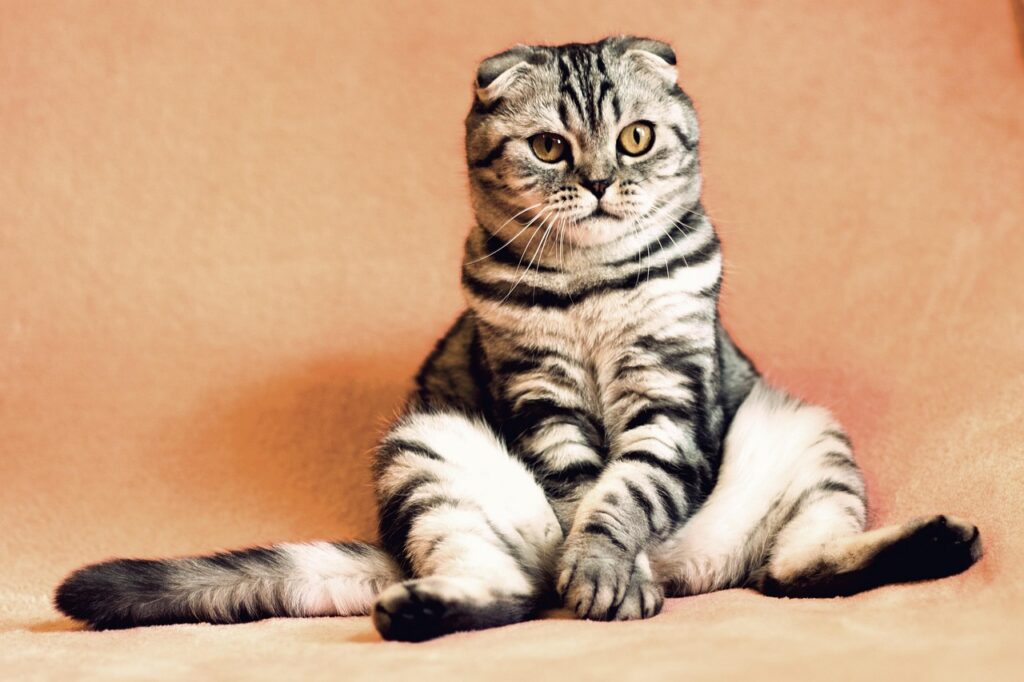
Why Are Cats So Adorable? The Science of Cuteness
Baby Schema Effect: Why Cat Faces Trigger Human Caregiving
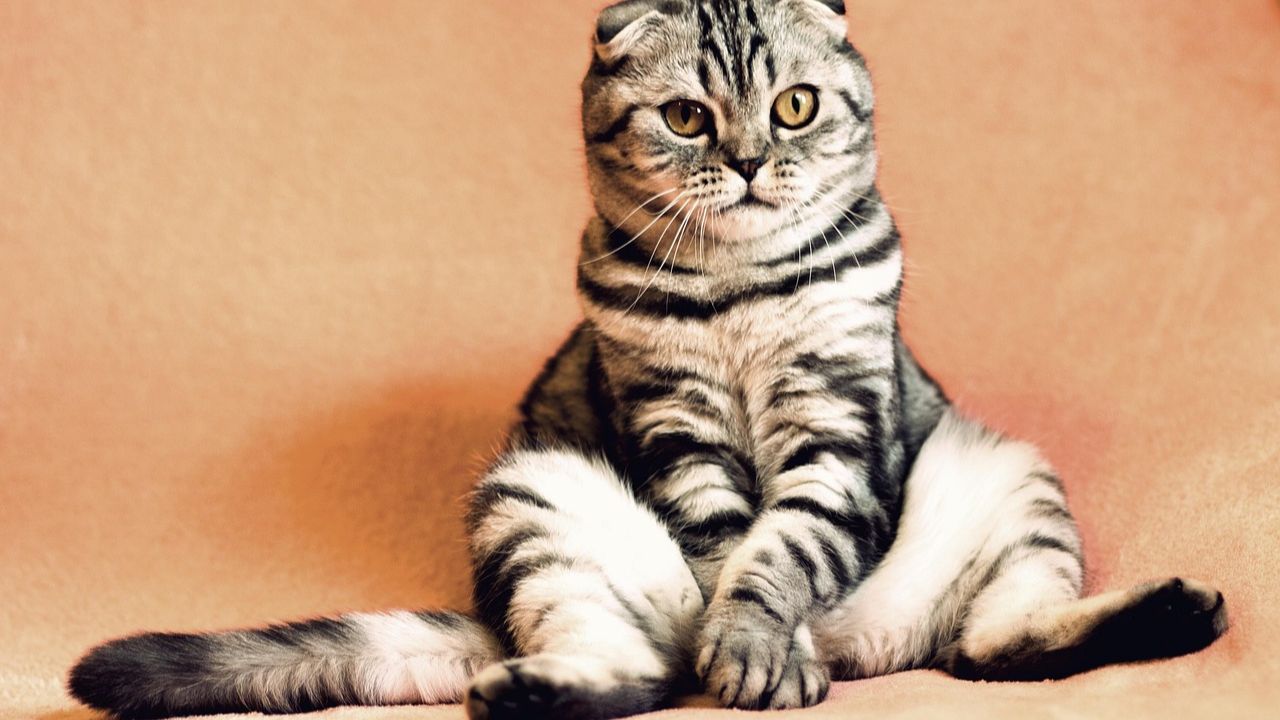
Cats often look adorable because their faces contain several features associated with human infants. Psychologist Konrad Lorenz called this pattern Kindchenschema, or the baby schema: a combination of a relatively large head, high forehead, large eyes, rounded cheeks, small nose and mouth, and a compact body. These proportions can make an animal appear vulnerable and dependent, which helps activate attention and caregiving motivation in humans. Baby-schema research therefore explains part of what people mean when they ask, “What are cats adorable for?”: their appearance engages a response originally linked to protecting young children. The concept is discussed in the research reviewed by Morten Kringelbach and colleagues, while Borgi et al. tested comparable infant-like features in human, dog and cat faces.
How Do Large Eyes, Round Faces, and Small Noses Resemble Baby Features?
Large eyes, rounder faces, higher foreheads, and smaller noses and mouths increase perceived cuteness because they resemble infant facial proportions. In Borgi et al.’s 2014 study of children aged 3–6, faces with stronger baby-schema features received higher cuteness ratings and attracted more visual attention across human, dog and cat stimuli. The result links visual appeal with a measurable allocation of attention rather than treating cuteness as a purely subjective reaction. A cat’s eyes do not need to be literally enormous; they only need to appear large relative to the muzzle and face.
The same pattern explains why a kitten’s short muzzle and rounded cheeks can seem more appealing than a sharply tapered adult face. A small nose creates more open visual space around the eyes, while a high forehead and compact lower face exaggerate the impression of youth. These features do not prove that a cat is harmless or dependent. They influence the human observer’s first response, often before the observer has interpreted the cat’s posture, movement, or emotional state.
Why Do Large Heads, Rounded Bodies, and Soft Fur Capture Attention?
Large heads and rounded bodies capture attention by making a cat appear compact, young, and physically non-threatening. Lorenz’s baby-schema account includes a large head, plump body shape, short thick limbs, and rounded facial structure among the features associated with cuddliness. Dean Burnett, writing in The Guardian, connects the appeal of kittens with both these infant-like proportions and the tactile pleasure of soft fur. Fur adds a second channel: the animal looks gentle from a distance and feels pleasant when touched.
- Visual roundness: Rounded cheeks, paws, hips, and body contours reduce angularity and make the silhouette easier to read as soft.
- Compact scale: A small body invites handling and protection, although individual cats still control whether contact feels welcome.
- Soft surface texture: Fur provides a tactile cue that humans commonly associate with warmth, comfort, and social contact.
Softness also helps explain why people may respond differently to a furry cat and a visually similar animal with scales, spines, or rough skin. Burnett presents this as a likely extension of social-grooming preferences among mammals, not as proof that every human shares the same tactile response. The sensory impression matters, but it works alongside facial proportions, behavior, and the observer’s previous experience.
Morten Kringelbach and the Neuroscience of Cuteness
Morten Kringelbach’s neuroscience research places cuteness within the brain’s reward and caregiving systems. Reviews of his work describe a rapid response to infant-like faces involving the medial orbitofrontal cortex, a region associated with valuation, emotion, and reward. Other neuroimaging research on baby schema has also identified activity in the orbitofrontal cortex and related visual and affective regions when participants viewed infant faces. This does not mean that the brain labels every cute cat as a baby; it means infant-like visual cues can recruit neural systems that make attention and care feel rewarding.
“Baby schema affects both cuteness perception and gaze allocation” in children viewing human, dog, and cat faces — Borgi et al., Frontiers in Psychology, 2014.
Kittens vs Adult Cats: Why Youthful Proportions Feel Especially Adorable
Kittens often appear especially adorable because they display baby-schema proportions more strongly than adult cats. Their heads are large relative to their bodies, their eyes appear oversized, their limbs look short, and their movements remain uncoordinated. Borgi et al.’s child-rating study found that kittens and puppies received similar cuteness scores, while among adult animals the dog received a higher cuteness score than the cat. The finding shows that age and species interact: youthful proportions can narrow the difference between species, whereas adult body shapes produce more varied judgments.
Which Kitten Features Make Cuteness So Powerful?
Kitten cuteness becomes powerful when several infant-like features appear together rather than in isolation. A large head works with big eyes; a short muzzle works with rounded cheeks; small paws work with a soft, compact body. This combination creates a coherent visual signal of youth. Borgi et al. found that stronger baby-schema faces attracted more gaze and higher cuteness ratings, supporting the idea that observers respond to an overall configuration rather than one universally decisive feature.
- Relative head size makes the kitten appear younger than an adult cat.
- Eye-to-face ratio directs attention toward the eyes and enlarges the perceived emotional expressiveness of the face.
- Short muzzle and small mouth preserve the rounded outline associated with infant faces.
- Plump paws and soft body contours add tactile and visual impressions of harmlessness.
How Do Playfulness, Curiosity, and Clumsy Movement Reinforce Cuteness?
Playfulness and clumsy movement reinforce cuteness by making a kitten appear active yet inexperienced. A kitten that pounces too early, tumbles while turning, or misjudges a jump displays movement that humans may interpret as endearing because the action combines intention with limited coordination. Dean Burnett uses a mischievous kitten as an example of this contrast: the animal can behave boldly and destructively while its face continues to trigger affection. The appeal comes from the mismatch between small, infant-like appearance and surprisingly forceful behavior.
Curiosity adds another layer because it produces visible attention: ears orient forward, eyes track movement, and the body approaches unfamiliar objects. Those actions make the kitten appear mentally engaged rather than passive. Cuteness therefore depends on more than still photographs. A kitten’s motion gives the observer a sequence of expressive events, and each stumble, pounce, or inspection can strengthen the impression of personality.
Why Can Adult Cats Remain Adorable After Losing Kitten-Like Proportions?
Adult cats remain adorable because cuteness can shift from youthful anatomy to behavior, familiarity, and individual expression. An adult cat may retain rounded cheeks, large eyes, a soft coat, or a compact posture, but its appeal can also come from predictable rituals, distinctive vocalizations, or a familiar way of approaching people. The 2022 Applied Animal Behaviour Science study by Leech and colleagues found that owner animal preference was associated with differences in reported cat traits such as curiosity and friendliness toward the owner. That result suggests that the human–cat relationship can influence how an individual cat is perceived, not simply how the cat looks.
Purring, Kneading, and Slow Blinking: How Cat Behaviors Feel Cute
Cat behaviors feel cute when humans interpret visible and audible signals as evidence of comfort, trust, or social connection. The interpretation becomes more accurate when several signals appear together. In a 2024 study of 630 participants, de Mouzon, Di-Stasi and Leboucher found that people identified cat behaviors with 91.8% accuracy when visual and vocal cues were presented together, compared with 87.3% for visual cues alone and 72.2% for vocal cues alone. Human observers therefore read cats more effectively from multimodal behavior than from one isolated cue.
Why Do Purring, High-Pitched Meows, and Chirps Appeal to Human Emotions?
Purring and high-pitched vocalizations appeal to human emotions because they are salient sounds that invite interpretation and attention. A purr provides a continuous auditory signal, while a meow or chirp is shorter and more event-like, often directing a person toward the cat. Human listeners may associate these sounds with solicitation, contentment, or social contact, but the meaning depends on the accompanying posture and situation. De Mouzon and colleagues’ results show why sound alone is weaker than sound combined with visual evidence.
Cat-specific sound can also attract cats themselves. Snowdon, Teie and Savage reported that cats responded more to species-appropriate music than to human music: the median response was 1.5 acts for cat music compared with 0.25 acts for human music. The experiment does not show that cats find music “cute,” but it demonstrates that feline auditory preferences differ from human assumptions about pleasant sound.
How Do Kneading, Bunting, and Rubbing Against People Signal Affection?
Kneading, head bunting, and rubbing can signal social comfort when the cat’s body remains relaxed and the behavior occurs in a familiar interaction. Kneading resembles the rhythmic paw movement kittens use during nursing, so observers often read it as a retained juvenile behavior. Bunting and rubbing transfer scent from facial and body glands, creating a social exchange that can function as affiliation between cats and between cats and people. The action may look adorable because it combines a small repetitive movement with direct physical contact.
Context changes the interpretation. A cat that rubs against a person and then eats, plays, or settles nearby may be combining social contact with another goal. A cat that kneads while tense, vocalizing unusually, or trying to retreat requires a different reading. The behavior becomes meaningful through its full sequence, not through the paw movement alone.
Why Do Napping, Sitting Nearby, and Playful Mischief Seem So Endearing?
Napping and sitting nearby seem endearing because they make a cat’s presence feel voluntary rather than forced. Cats often appear most charming when they choose proximity without demanding continuous handling: resting on a chair, settling beside a person, or observing household activity from a short distance. The apparent independence creates a rewarding sense of selective trust. Playful mischief adds surprise, especially when a composed adult cat suddenly attacks a toy, races through a room, or investigates an object with exaggerated seriousness.
Slow blinking strengthens this social impression. In the 2020 Scientific Reports study “The Role of Cat Eye Narrowing Movements in Cat–Human Communication,” cats were more likely to approach people after the people used slow-blink interactions than after neutral expressions without direct eye contact. The result supports slow blinking as a possible positive communication signal, although it does not turn every blink into proof of affection.
The Sensory Science of Cats: Soft Fur, Squishy Paws, and Soothing Sounds
Cats feel adorable partly because their appearance and texture combine rounded visual forms with soft, responsive surfaces. Fur changes how light outlines the body, cushions angular features, and creates a tactile expectation before contact occurs. Rounded paws add visual softness, while toe beans provide a high-contrast, compact detail that attracts attention. These reactions remain perceptual preferences rather than universal laws: people differ in the textures and animals they enjoy.
Why Does Touching Soft Fur and Rounded Paws Increase Perceived Cuteness?
Soft fur and rounded paws increase perceived cuteness by extending the visual impression of gentleness into touch. Dean Burnett connects the pleasure of stroking fur with mammalian social grooming, proposing that pleasant contact may make furry animals more appealing to humans. The explanation remains evolutionary and comparative rather than a direct measurement of every cat owner’s response, but it accounts for why photographs may feel less satisfying than handling a calm, receptive cat.
- Fur softens the animal’s outline and provides a pleasurable surface for touch.
- Paw pads create a small, rounded visual target with a contrasting texture.
- Whiskers add delicate lines around the face, increasing visual detail without making the silhouette angular.
Touch still requires consent from the cat. A soft surface may attract a person’s hand, but the cat’s tail, ears, muscle tension, and movement determine whether contact should continue. Perceived cuteness explains the impulse to touch; body language determines the appropriate response.
How Do Cat Sounds Influence Human Attention and Affection?
Cat sounds influence human attention by creating rhythmic, repeated, or high-salience signals that people try to decode. Domestic cat purrs commonly span approximately 25–150 Hz, according to the American Animal Hospital Association. This low-frequency vibration contributes to the familiar tactile and auditory quality of purring, but the same source stresses that cats may purr during pain, fear, or distress. A soothing sound for the listener therefore does not guarantee a soothing experience for the cat.
| Signal | Why humans may find it appealing | What context must clarify |
|---|---|---|
| Purring | Continuous vibration and apparent calm | Pain, fear, distress, or self-soothing can also produce purring |
| Chirping | Short, bright, attention-grabbing sound | Prey observation, excitement, or solicitation may be involved |
| Meowing | Directly attracts human attention | Food, greeting, frustration, discomfort, or social contact may explain it |
What Role Does Visual Contrast Play in Making Cats Look Adorable?
Visual contrast makes cats look adorable by concentrating attention on features such as eyes, nose, whiskers, paw pads, and coat markings. Dark pupils against lighter irises, a pink nose against surrounding fur, or pale toe beans against dark hair creates an easily detected focal point. Contrast does not independently create baby schema, but it can make baby-schema features more visible and memorable. A round face with clearly defined eyes communicates more rapidly than a face whose features blend into one uniform tone.
Beyond Baby Schema: Why Different People Find Different Cats Adorable
People disagree about which cats are adorable because cuteness combines shared perceptual biases with personal learning and cultural experience. Baby-schema features provide a common starting point, but familiarity can increase emotional value, while prior preferences can influence attention to personality. Leech et al.’s 2022 study found significant effects of owner animal preference on reported cat traits including curiosity and friendliness toward the owner. The finding does not prove that owners deliberately reshape their cats’ personalities; it shows that owner preference belongs in research on how cats are perceived and described.
Which Cat Features Are Broadly Appealing Across People and Cultures?
Infant-like facial proportions are among the most broadly appealing features identified in comparative cuteness research. Borgi et al. found that stronger baby-schema faces received higher ratings and more visual attention from young children across human, dog, and cat stimuli. Large eyes, rounder faces, higher foreheads, and smaller noses and mouths therefore appear to have cross-species relevance, although the study does not establish identical preferences across every culture or age group.
How Do Breed, Personal Experience, Familiarity, and Culture Shape Cat Cuteness?
Breed, experience, familiarity, and culture shape cat cuteness by changing which visual and behavioral cues an observer recognizes as appealing. A person raised with long-haired cats may find flowing coats especially attractive, while another may prefer hairless cats, folded ears, short muzzles, or athletic body types. The 2022 owner-and-cat demographics study found that cat breed itself did not produce significant effects on the measured personality traits, even though owner preference and housing factors did. That distinction separates a cat’s physical category from the human interpretation attached to it.
Familiarity can also make subtle signals easier to read. A person who knows one cat may recognize a particular chirp, resting posture, or blink pattern as meaningful, while a stranger sees only an ordinary animal. This is why attachment can make an adult rescue cat appear uniquely adorable even when its face does not match a popular breed standard.
Why Can Less Conventionally Cute Breeds and Senior Cats Still Seem Adorable?
Less conventionally cute breeds and senior cats remain adorable when individuality, social history, and behavior outweigh standard infant-like proportions. Senior cats may have slower movements, graying fur, dental changes, or less rounded bodies, yet their familiar routines can create strong emotional value. A distinctive expression, patient tolerance, or ritualized greeting becomes part of the cat’s identity. Cuteness therefore operates as both an immediate perceptual response and a relationship-based judgment that develops over time.
Cute but Predatory: Why Cats’ Mischievous Independence Adds to Their Charm
Cats become especially compelling when a vulnerable-looking appearance coexists with predatory ability and independent behavior. The observer sees large eyes, soft fur, and a small body, then watches the same animal stalk, pounce, seize a toy, or defend a preferred space. This contrast creates a richer emotional response than helplessness alone. Dean Burnett’s commentary in The Guardian captures the pattern through a kitten that looks irresistibly cute while behaving boldly and destructively.
Why Does the Contrast Between Vulnerability and Hunting Ability Feel Compelling?
The contrast feels compelling because the cat appears both dependent and capable. Baby schema may invite care, while predatory movement demonstrates competence. Those signals pull in different directions: one encourages protection, the other commands attention. The result is not simple sympathy but fascination. A cat that hides under a blanket and then launches at a moving toy creates a rapid shift between vulnerability and agency.
How Do Cheekiness, Unpredictability, and Independent Behavior Affect Perceived Cuteness?
Cheekiness and unpredictability increase perceived cuteness by turning the cat into an active character rather than a static object. PDSA’s 2024 Animal Wellbeing Report found that 52% of owners said their cats played with toys in a predatory way by themselves, while 50% reported this type of play with their owners. The report also recorded predatory play in 83% of cats aged 0–4, compared with 77% of cats aged 5–12 and 61% of cats over 12. These figures show that hunting-style play is common but declines with age, giving youthful mischief a measurable behavioral basis.
| Cat age | Owners reporting predatory play | Interpretive effect |
|---|---|---|
| 0–4 years | 83% | More frequent pouncing, chasing, and toy capture |
| 5–12 years | 77% | Play remains common but may become more selective |
| Over 12 years | 61% | Predatory play is less frequently reported |
What Does Dean Burnett’s Commentary Add to the Psychology of Cat Appeal?
Dean Burnett’s commentary adds the idea that cuteness can override a rational assessment of behavior. His example shows a kitten that commits acts humans would normally find alarming or irritating, yet its facial appearance preserves the emotional judgment that it is lovable. Burnett also discusses soft fur, baby-schema proportions, and the possibility that intense cuteness can produce contradictory reactions such as wanting to squeeze or “eat up” something adorable. The commentary works as an accessible psychological interpretation, while the experimental studies provide the stronger evidence for specific visual and behavioral effects.
When Cute Cat Behavior Does Not Mean Affection
Cute behavior does not prove affection because the same action can serve different emotional or physiological functions. Purring may accompany contentment, but the American Animal Hospital Association states that cats can also purr during pain, fear, or distress. De Mouzon, Di-Stasi and Leboucher likewise found that people were much less accurate at identifying discontentment than contentment: 71.6% compared with 90.1%. Humans therefore tend to recognize pleasant-looking states more easily than uncomfortable ones.
Why Can Purring Signal Stress, Pain, or Self-Soothing?
Purring can signal stress, pain, or self-soothing because cats may use the vibration during states that require regulation rather than social pleasure. The American Animal Hospital Association compares the possibility to distress behaviors in humans that provide comfort or help manage discomfort. A cat that purrs while hiding, breathing differently, refusing food, remaining tense, or avoiding touch should not be classified as happy from the purr alone. The relevant question is not “Does the cat purr?” but “What else is the cat’s body communicating?”
How Can Kneading and Slow Blinking Have Different Meanings Depending on Context?
Kneading and slow blinking acquire meaning from the surrounding body language and interaction history. Kneading on a relaxed lap may accompany comfort, while kneading during restlessness or repeated repositioning may reflect self-soothing. Slow blinking can function as a friendly, low-threat exchange, and the 2020 study found that cats were more likely to approach after humans used slow-blink interactions. Yet a narrowed eye can also reflect irritation, pain, bright light, or a medical problem when it occurs asymmetrically or with other abnormal signs.
Why Should Appearance-Based Cuteness Not Override a Cat’s Body Language?
Appearance-based cuteness should never override body language because visual appeal describes the observer’s reaction, not the cat’s welfare state. Flattened ears, a tightly tucked body, rapid tail movements, avoidance, dilated pupils, tense muscles, or sudden changes in vocalization may indicate that interaction should stop. De Mouzon et al.’s 2024 results show that discontentment was the hardest category for participants to identify, which makes misreading an apparently cute cat a predictable human error rather than a rare mistake.
- Look at the whole body: Face, ears, tail, posture, movement, and vocalization should be assessed together.
- Compare with the cat’s baseline: A familiar cat’s sudden change matters more than a single isolated expression.
- Respect withdrawal: Turning away, hiding, or stiffening communicates a boundary even when the cat still looks adorable.
From Oxford Sparks to Cat Behavior Research: The Next Step in Understanding Cuteness
The next step in understanding cat cuteness is to connect human perception research with detailed studies of feline communication and behavior. Oxford Sparks presents cat cuteness through big eyes, fluffy paws, and cheeky personalities, while research in animal behavior tests how people decode specific signals. The combination matters because a photograph may explain why humans notice a cat, whereas behavioral observation can clarify what the cat is communicating.
How Can Neuroscience and Animal-Behavior Studies Explain Individual Cat Preferences?
Neuroscience can explain rapid human responses to infant-like features, while animal-behavior studies can explain why different cats and contexts produce different judgments. Kringelbach’s work addresses reward and caregiving responses to cuteness, whereas feline communication research measures facial movements, vocal cues, and interaction outcomes. A 2024 Scientific Reports study analyzed 186 communicative events involving 53 adult domestic shorthair cats and used an automated facial-analysis system based on 48 cat facial landmarks. The study shows how researchers can move beyond subjective labels such as “cute” toward measurable facial configurations and social contexts.
Machine-learning models in that study examined whether facial information could help classify affiliative and non-affiliative interactions. The method does not yet provide a universal “cuteness detector,” but it creates a foundation for separating facial shape, facial movement, social function, and human interpretation. That distinction will help researchers test whether people prefer a cat because of its face, its behavior, their history together, or all four factors at once.
What Can Future Research Reveal About Human–Cat Attachment?
Future research can reveal how appearance-based attraction develops into individual attachment over repeated human–cat interactions. Studies could compare first impressions with long-term preferences, measure how owners interpret the same cat across different emotional states, and test whether cultural experience changes responses to breeds, coat patterns, or facial shapes. Research could also examine whether multimodal training improves people’s recognition of discomfort, since de Mouzon and colleagues found that combined visual and vocal cues produced the highest accuracy.
The most useful advance will link the human brain’s rapid response to baby-like features with the cat’s actual communicative signals. A cat may attract attention because its face resembles a baby, sustain affection through playful individuality, and require careful interpretation when its behavior changes. That framework turns the question “Why are cats so adorable?” into a broader scientific problem: how humans convert perception into attachment while learning to read another species accurately.